As the nation acquires yet another Prime Minister, we observe — strictly for the record — that he is nowhere near the oddest to have run the place. The Eccentric Club does not discuss politics. It merely notes the characters who contrive to make such a mess of it, as most Prime Ministers, in the fullness of time, reliably do.
Imagine the most powerful man in the British Empire - pedalling sedately through the shrubberies of Hatfield in a purple velvet poncho, with a liveried footman jogging behind to shove him up the inclines. This is not a fever dream, nor a scene struck from some unmade Ealing comedy. It is the third Marquess of Salisbury - Prime Minister for the better part of two decades, arbiter of the fate of continents - taking his afternoon exercise. Somewhere in the great house behind him, his private electrical laboratory hums; on the drive, five hundred tons of gravel have been laid at ruinous expense to smooth the smallest hill from his path.
One might suppose such a figure to be the exception. He is, in fact, the rule. For a nation that prides itself on the sober, the sensible and the stiff upper lip, Britain has entrusted its highest office, with almost suspicious regularity, to the genuinely peculiar. And here the Club may permit itself a proprietorial cough. Long before any of these gentlemen reached Downing Street, the pursuit of magnificent oddity had a home - and it was ours.
The Society of Eccentrics grew, as our members well know, from The Brilliants, that convivial Whig debating club whose roll once glittered with the names of Sheridan, Charles James Fox and a promising young man called William Pitt the Younger. When, in the 1790s, a nervous government moved to shutter London's debating societies, one club alone kept its doors open - protected by its ancient vow to entertain no debate on politics or religion, and by the quiet patronage of that same Mr Pitt, by then First Lord of the Treasury. The nation's most eccentric institution was saved by its most eccentric premier. We have never quite got over the compliment.
So, what follows, then, is a gallery - a ranking, if one insists - of the ten most eccentric souls to have held the premiership. Nothing here is gossip; all is a matter of record, much of it set down by the gentlemen themselves. The Club's motto, Nil Nisi Bonum, is observed throughout. But whether they were true eccentrics or mere specimens of Peculiaris vulgaris, we leave to the reader to judge - as we leave the question of whether ten is even the right number.
The Gallery
I. William Ewart Gladstone (Prime Minister four times, 1868–94)
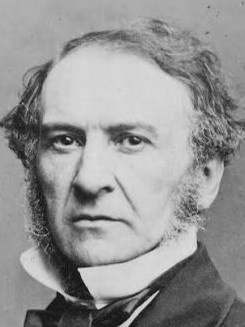 The Grand Old Man contained multitudes, and slept through almost none of them — four hours a night sufficed him. What sleep he forwent he repaid in exercise of a most singular kind: the felling of trees, at which he laboured with an almost sacramental devotion, his personal axe among his most treasured possessions. Visitors to Hawarden were handed a saw and pressed into service. At table he chewed each mouthful thirty-two times, once for every tooth, and credited the ritual for his iron constitution. And after the House rose, this most uxorious and pious of men would walk the darkened streets on his private mission to rescue fallen women — a genuine, decades-long compulsion, faithfully entered in his own diaries. No premier has ever been odder in more directions at once.
Famous quote:
"Be inspired with the belief that life is a great and noble calling..."
II. Robert Gascoyne-Cecil, 3rd Marquess of Salisbury (1885–1902)
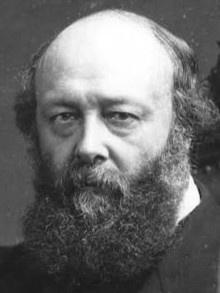 We have met him already, aboard his tricycle. To that image add the shabby clothes he adored, the society he could not abide, and the laboratory at Hatfield where he conducted electrical experiments of real scientific seriousness. He was, by common account, face-blind, and would on occasion fail to recognise his own Cabinet ministers — an affliction one suspects he did not always resent. The longest-serving Tory premier of the modern age governed a quarter of the globe while dressing like an impoverished curate and cycling through his own gardens in fancy dress.
Famous quote:
"English policy is to float lazily downstream, occasionally putting out a diplomatic boat-hook to avoid collisions."
III. Sir Winston Churchill (1940–45, 1951–55)
The habits are legend, and the legends are largely true. He actually invented the "siren suit" — a one-piece garment cribbed from a bricklayer's boiler suit, one example run up in black velvet for dinner — and dictated affairs of state from his bath, of which he took two a day. At Chartwell he laid bricks, painted in oils and presided over a private menagerie of black swans, pigs, cats, and a duck-billed platypus, dispatched from Australia and named, inevitably, Winston. 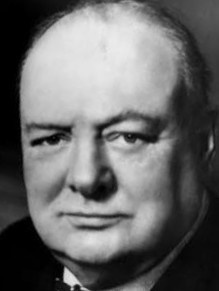 He worked around the clock from his bed, sustained himself on heroic quantities of whisky and champagne, and was seldom seen without one of his trademark cigars. For leading Britain through its darkest hour and helping save Western civilisation, we can surely forgive him every one of those eccentricities.
Famous quote:
"We are all worms. But I do believe that I am a glow-worm."
IV. Archibald Primrose, 5th Earl of Rosebery (1894–95)
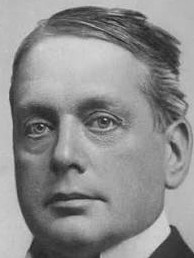 As a young man he announced three ambitions: to marry an heiress, to win the Derby and to become Prime Minister. He achieved all three - marrying the Rothschild fortune, winning the Derby thrice, and taking the highest office - and derived, one gathers, remarkably little joy from any of it. His charm was such that contemporaries said he "almost eclipsed royalty"; his insomnia was such that he confessed sleeplessness had blurred his judgement in office. Widowed and disenchanted, he retreated into morphine and eccentric seclusion in Scotland - the cautionary tale of a man granted every wish.
Famous quote:
"I must plough my furrow alone."
V. Benjamin Disraeli (1868, 1874–80)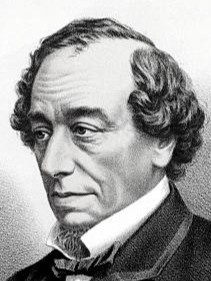
Before he was the Sphinx of the Conservative benches, he was the most flamboyant dandy in London: velvet coats lined with satin, cascades of black ringlets, scarlet waistcoats, lace to the fingertips, and jewelled rings worn outside his white gloves. He was also a working novelist who had inspired half of Dorian Gray, and whose maiden speech the Dictionary of National Biography pronounced, with pursed lips, "ambitious and eccentric." He toned down the wardrobe; the audacity, mercifully, never dimmed.
Famous quote:
"When I want to read a novel, I write one."
VI. Spencer Perceval (1809–12)
 Our only assassinated Prime Minister, but privately one of the strangest theologians ever to balance the nation's books. A serious student of Biblical prophecy, he anonymously published A Plain View of the Course of Events Connected with the Apocalypse, confidently predicting Napoleon's downfall and arguing that the French Revolution was an instrument of Divine Providence in the destruction of Roman Catholic power. After an impressive amount of scriptural arithmetic, he concluded that the world would end in 1926. Happily, he proved more successful as Chancellor than as prophet. A devoted husband and father of twelve, he pursued these convictions at the very summit of Regency government with the calm assurance of a man reading tomorrow's weather forecast.
Famous quote:
"Prophecy is not given to gratify curiosity, but to strengthen faith."
VII. William Pitt the Younger (1783–1801, 1804–06)
The Club's very own, and Britain's youngest premier at twenty-four. His heroic consumption of port began not in vice but in medicine: prescribed a bottle a day at the age of fourteen to treat his gout, by a physician who happened to be the father of a future Prime Minister, Henry Addington. The cure, needless to say, was worse than the complaint, and he addressed the Commons the better for it. That the man who saved our doors should himself have been kept upright chiefly by fortified wine is a symmetry we cherish.
Famous quote:
"Necessity is the plea for every infringement of human freedom. It is the argument of tyrants; it is the creed of slaves."
His reported last words, however, are considerably more eccentric: "I think I could eat one of Bellamy's mutton pies."
VIII. Sir Edward Heath (1970–74)
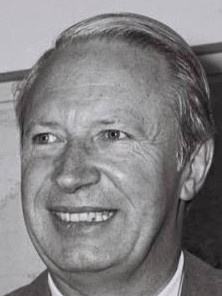 A solitary man of startling accomplishment. An organ scholar of Balliol, he became the first serving Prime Minister to conduct a leading professional orchestra, taking up the baton for the London Symphony Orchestra, and installed a Steinway in Number Ten. Simultaneously, he was among the finest ocean-racing yachtsmen of his day - winning the Sydney to Hobart in his Morning Cloud and captaining Britain's victorious Admiral's Cup team while actually in office. Few men have been so gifted, and so entirely alone at the top.
Famous quote:
"You mustn't expect prime ministers to enjoy themselves. If they do, they mustn't show it — the population would be horrified."
IX. Sir Alec Douglas-Home (1963–64)
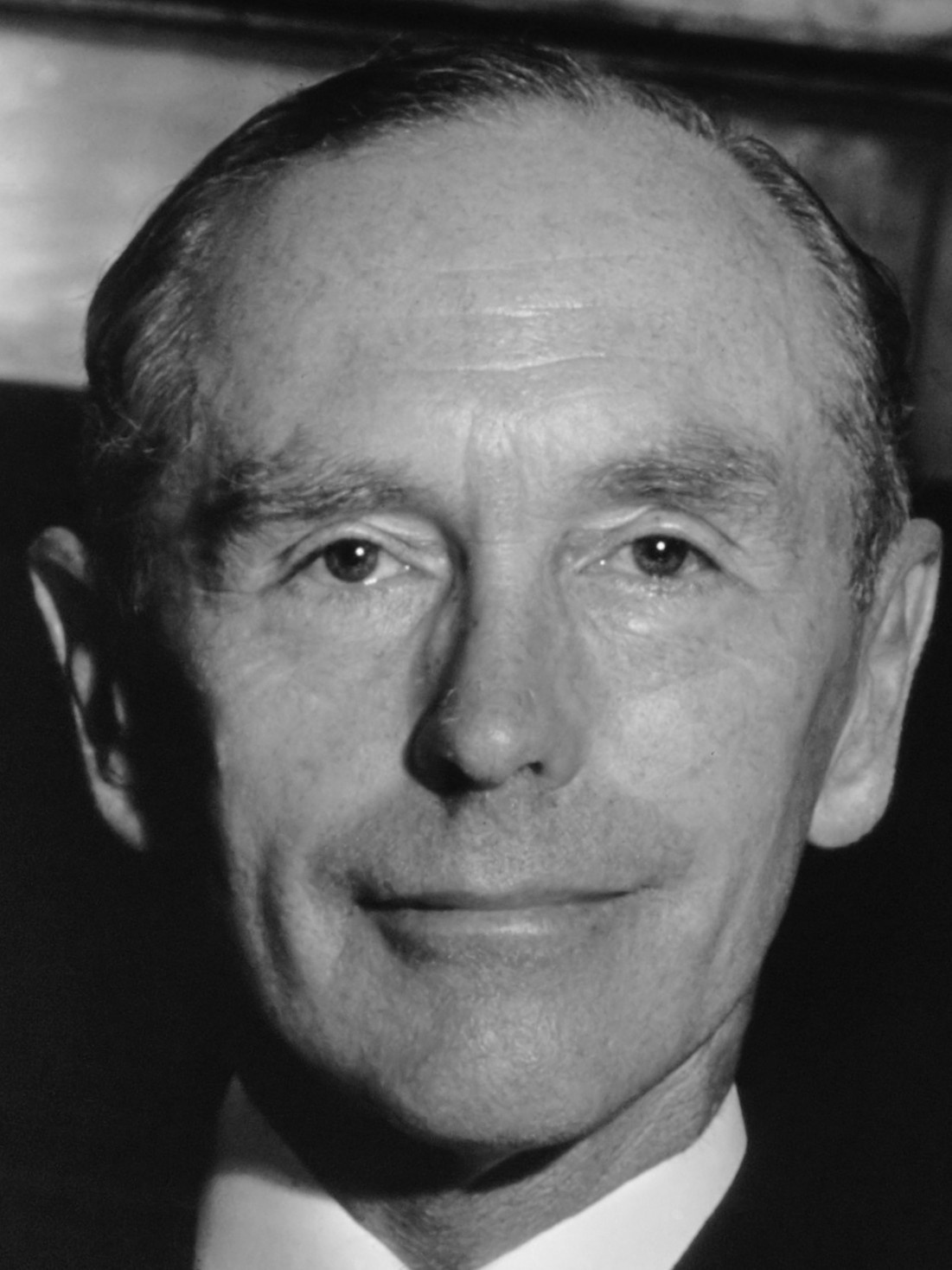 The last premier to govern, briefly, from the Lords, and the most disarmingly candid about his limitations. Asked whether he might become Prime Minister, he demurred with a confession of economic innumeracy so perfect it became his epitaph. He preferred the grouse moor and the flower border to the red boxes, and embodied a patrician amateurism that already, by the 1960s, seemed a relic of some gentler age.
Famous quote (asked whether he might become Prime Minister):
"No, because I do my sums with matchsticks."
X. Arthur Balfour (1902–05)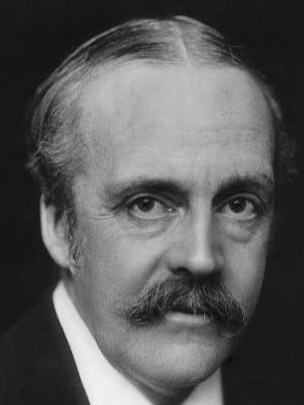
Salisbury's nephew and successor, and the most languid man ever to hold the office. A lifelong bachelor, a founder of that aesthetes' coterie The Souls, and a published metaphysician, he distilled his serene detachment into a single, much-quoted maxim. He took up early motoring and real tennis with more evident enthusiasm than he ever brought to high office, which he treated throughout with the amused indifference of a philosopher watching clouds.
Famous quote:
"Nothing matters very much, and few things matter at all."
Legends We Decline to Verify
No account of eccentric premiers is complete without the apocrypha - and no publication bearing the Club's name should print them without saying plainly what they are. Herewith, the great myths, offered strictly as gossip:
That Lord Palmerston allegedly expired in 1865 not of a chill but mid-liaison, atop the billiard table at Brocket Hall, discovered in flagrante by his wife. His biographers record no such thing; the tale is below-stairs whisper, and he died, more prosaically, of a fever days short of his eighty-first birthday.
That Churchill, emerging naked from his White House bath before a wheeled-in Roosevelt, purred, "I have nothing to conceal from you." The encounter is real - corroborated by his stenographer and by FDR's confidante - but Churchill himself denied the immortal line, admitting only that he later boasted to King George VI of being the sole man to receive a head of state without a stitch on. A true event; yet a borrowed punchline.
That the young Rosebery's private life was other than it appeared. The rumours are ancient, unproven and beneath us.
And - verified, this one, and all the more astonishing for it - that Lord Melbourne's wife, the incorrigible Lady Caroline Lamb, once had herself served to her guests at Brocket Hall from a vast silver tureen, wearing nothing whatsoever. Her affair with Byron is sober history. The tureen is merely magnificent.
The Eleventh Man
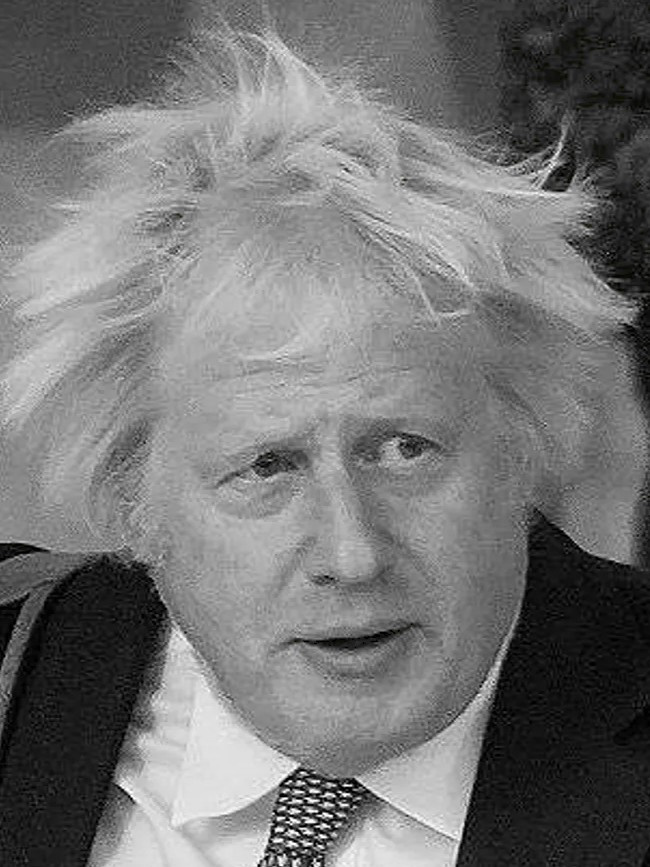 Every proper list observes its own limits. It is therefore entirely in keeping with the spirit of this one that it should overrun them - and so, hors concours, at Number Eleven of a list of ten, we admit Boris Johnson.
The credentials are not in doubt: the classicist who recites Homer from memory, the Mayor who dangled helplessly from a zip-wire waving two Union Jacks, the statesman who flattened a schoolboy in a "friendly" game of rugby in Japan, and who unwinds, he assures us, by fashioning discarded wine crates into painted model buses, complete with passengers "enjoying themselves." A finer résumé of oddity could scarcely be assembled to order.
Famous quote:
"My chances of being PM are about as good as the chances of finding Elvis on Mars, or my being reincarnated as an olive."
The Club, it should be admitted, during his years at City Hall, did him the honour of an invitation to membership - and he did us the honour of a refusal, declining with perfect courtesy on the grounds that the running of London left no room in his diary for anything so agreeable as good fellowship. It was, we like to think, among the more sensible decisions of his public career. We forgave him at once; forgiveness, after all, is rather our house speciality.
And yet he cannot quite make the ten - for a reason that goes to the very heart of what this Club has always understood. The eccentricity of a Salisbury or a Perceval was genuine: they could no more help themselves than fly. With Mr Johnson, one can never be wholly certain that the ruffled hair and the amiable bumble are not, in the end, a performance staged for one's benefit. That distinction is the difference between our first ten and our eleventh - and it is, we submit, precisely the difference the Society of Eccentrics was founded, two and a half centuries ago, to keep.
Which leaves only the question of where one might find such company today. We would suggest, with all due modesty, that the address has not changed.
Nil Nisi Bonum.