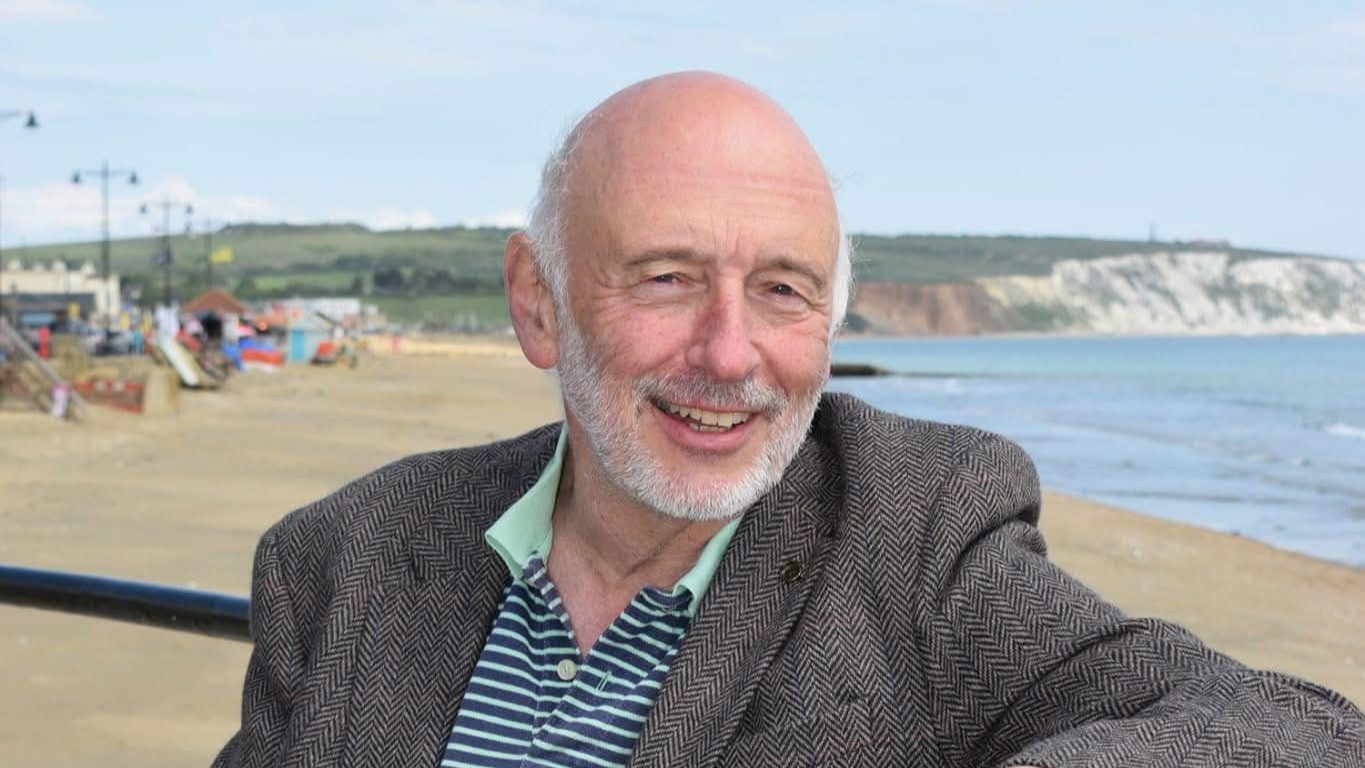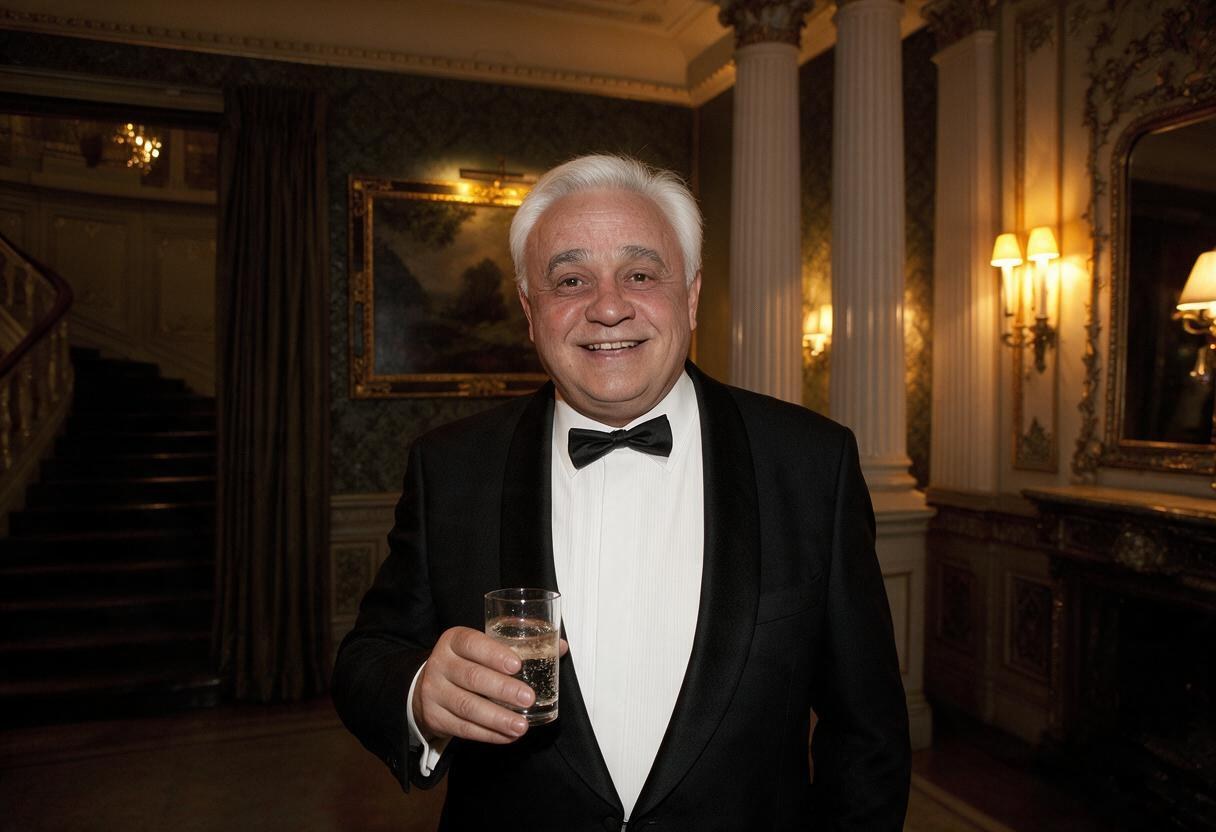
The betting men do not, as a rule, become philanthropists, and the philanthropists do not, as a rule, start in the parlay-card trade. Gary Bowman was both, in that order, and the second act was so much larger than the first that his fellow bookmakers were left, in the words of one of them, imagining him turning in his grave at what the profession had since become. He had got out, gone east, and turned himself into something none of them could have predicted.
He was born Roman Olenycz on 21 February 1952 in Littleborough, in the Lancashire hills above Rochdale, and the circumstances were about as far from the parlay card and the Mauritian server as it is possible to imagine.
His father, Iwan Olenycz, born in 1925, was a case repairer, and the records give his nationality as stateless - one of the great uprooted of the mid-century, a Ukrainian cast out of a homeland that had been ground between two empires and then swallowed whole by one of them. His mother, Juliana, née Mavryliuk, born in 1927, kept the house. They had come to a Lancashire mill town with nothing, not even a country, and made a family there: Roman, and his brother Wolodymyr, and his sisters Irena and Larysa.
It did not hold them long. On 10 October 1957, the whole family sailed from Southampton aboard the Columbia, bound for Montreal, with Roman, five years old, crossing the Atlantic to begin a third national life in a second adopted country. Stateless father, English birth, Canadian boyhood. He would make his fortune under the anglicised name Bowman, and spend it, in the end, having taken the old one back.
The parlay king
The fortune came first, and it came in the most twentieth-century way imaginable: on the telephone.
His instinct was for the American market, and specifically for the great untapped appetite of the American sports bettor, whom the laws of his own country would not accommodate. In 1985, he formed American Football Pools, a London company that took mail-in parlay cards on NFL games from anywhere on earth. Two years later came Sports Action International, run out of his adopted home city of Manchester, with a telephone call centre at the heart of it - a genuinely large one, manned around the clock, taking wagers on a global scale.
It became Bowman International, and in 1996, with the British taxman closing in on the margins, he did what the whole offshore industry was doing and lifted the entire enterprise out of the country - to Mauritius, of all places, where the servers for bowmans.com and the telecommunications plant sat in the Indian Ocean while a staff of a hundred and fifty operators took the calls. He was, by any reasonable measure, a pioneer of the offshore book, and he had built it out of nothing but a telephone line and an understanding of what men would bet on.
Then the digital age came for him, as it came for all of them. He had committed himself to the telephone, to human voices and physical exchanges, at the precise moment the business was migrating to the screen, and he did not chase it. The regulations tightened, the horizons narrowed, and - with the sound commercial instinct of a man who knows when a hand is played out - he sold up and went looking for somewhere new.
He found his parents' homeland.
The homecoming
From 2005, he lived in Lviv, the great Habsburg city of the west, took back the family name, and set about the place with the energy he had once given to the book.
The catalogue is startling. He gave a million US dollars to help the Ukrainian Olympic team compete at Atlanta in 1996 as an independent nation - one of the first times the newly independent country had marched under its own flag, and he underwrote it. He supported Dzherelo, the Lviv centre for the rehabilitation and teaching of people with special needs. He bought equipment for the special wards of the maternity hospital at the Lviv National Medical University. He financed the restoration of the city's Armenian Cathedral - one of the oldest and most beautiful buildings in Lviv - and of the church of St John Chrysostom. He sponsored AMALA, the international festival of Roma culture, in Kyiv in 2006 and again in 2007, a cause that was not fashionable anywhere and was distinctly unfashionable there.
In March 2007, the city named him 'Philanthropist of the Year' in its Galician Knight awards. He was inducted into the Ukrainian Sports Hall of Fame in the Legacy category. The bookmaker had become, without any apparent sense of contradiction, a pillar of a foreign city's civic and cultural life.
He also, it should be recorded, bought a garlic farm. A man who had run a hundred and fifty telephone operators taking wagers across the planet now had an interest in Galician horticulture, and saw nothing odd in it, and he was right not to - it was all, in his mind, the same project: putting money and attention into the soil of the place he had come back to. The Eccentric Club has admitted men for less than a garlic farm.
He explained himself once, and the explanation is better than anything an obituarist could supply for him.
Old age, he said, is like a bank account: a person withdraws from the account of memory what he has, across a life, deposited into it.
He was, in Lviv, making deposits at a furious rate, against an old age he must have known was not guaranteed.
The gallery and the Club
In 2009, the Gary Bowman Foundation opened the Gary Bowman Gallery, put it on the tourist map of Lviv, and set it up as a platform for exchange between Ukrainian and European art. In 2010, he joined the Eccentric Club; here he met Lucy McAdam Freud - great-granddaughter of Sigmund - and invited her to exhibit Mind Games in his gallery; this was followed by the Austrian Akelay Zell; a retrospective of the Polish master Arthur Szyk; and a long roll of others besides.
And in the same year, he made the thing that will outlast all the rest: the British Club, at 18 Nalyvaika Street, in the heart of what the locals call Austrian Lviv. He had fallen in love with a single building and then, with the patience of a man who has all the time and money in the world, bought it apartment by apartment until the entire block was his. He filled the upper floors with self-contained flats for visiting diplomats, academics, aristocrats and artists; he put an English-and-Galician breakfast in the dining room and an art gallery on the wall; and he declared the whole enterprise an act of love - for Britain, for Ukraine, and for the idea that the two might be joined economically, culturally and socially in one romantic building with a view of the old towers. The first member was Lord Pendry - Tom Pendry, the former Labour Shadow Sports Minister, who had helped Bowman through the thickets of British licensing law and become a close friend in the process; the second was Patrick Nally. It was, in effect, an Eccentric Club of his own devising, transplanted to the Galician crossroads of Europe and Asia, and it flourished.
The last table
There was a final act, and it was pure Bowman: having spent a lifetime in the business of the wager, he set about trying to make one form of it respectable. He founded, and then bankrolled and patronised, the International Federation of Poker - reconceiving the game as Match Poker, a team sport of pure skill fit to stand alongside the recognised federations - and it was his money and his refusal to let go that carried the fledgling body through its first uncertain years, hosting its early tournaments in Cyprus and Oxford and Sanya, and keeping it alive until, in 2017, Match Poker was formally recognised as a sport and the IFP became the IFMP. Without him, its president wrote afterwards, it would simply not exist. His friends there loved him without qualification, and when he died, they named a cup after him.
He died on 9 November 2020. He had come from Lviv to London - the city where the whole improbable fortune had begun - for surgery on an aneurysm that had been found and stented some three years before, and that had lately turned dangerous again. Friends had pressed him to deal with it; he had put it off, and by the time he consented, the odds had shortened against him. He did not come through.
His brain ceased to respond on the 9th. They held him on the machine two days more, so that his brother - Wolodymyr, four years older, who had become Walter in Canada - might fly in and have some time at the bedside; and on the 11th, the eleventh hour of the eleventh day as it happened, it was switched off, and his organs were given for donation.
In the Orthodox rite of the country he had made his own, the mourners sang the old acclamation over him - Vichnaya pamyat, eternal memory - which is the thing he had spent fifteen years trying to build in Lviv, in stone and paint and charity, for everybody but himself.
The Club salutes a member who made his fortune on what men would wager, and spent it on what a city would remember.
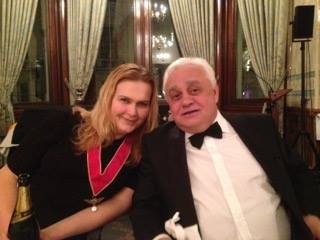
Gary Bowman, also known as Roman Olenycz (21 February 1952 – 9 November 2020), a former Eccentric Club member.