There is a temptation, and we had better own to it at once.
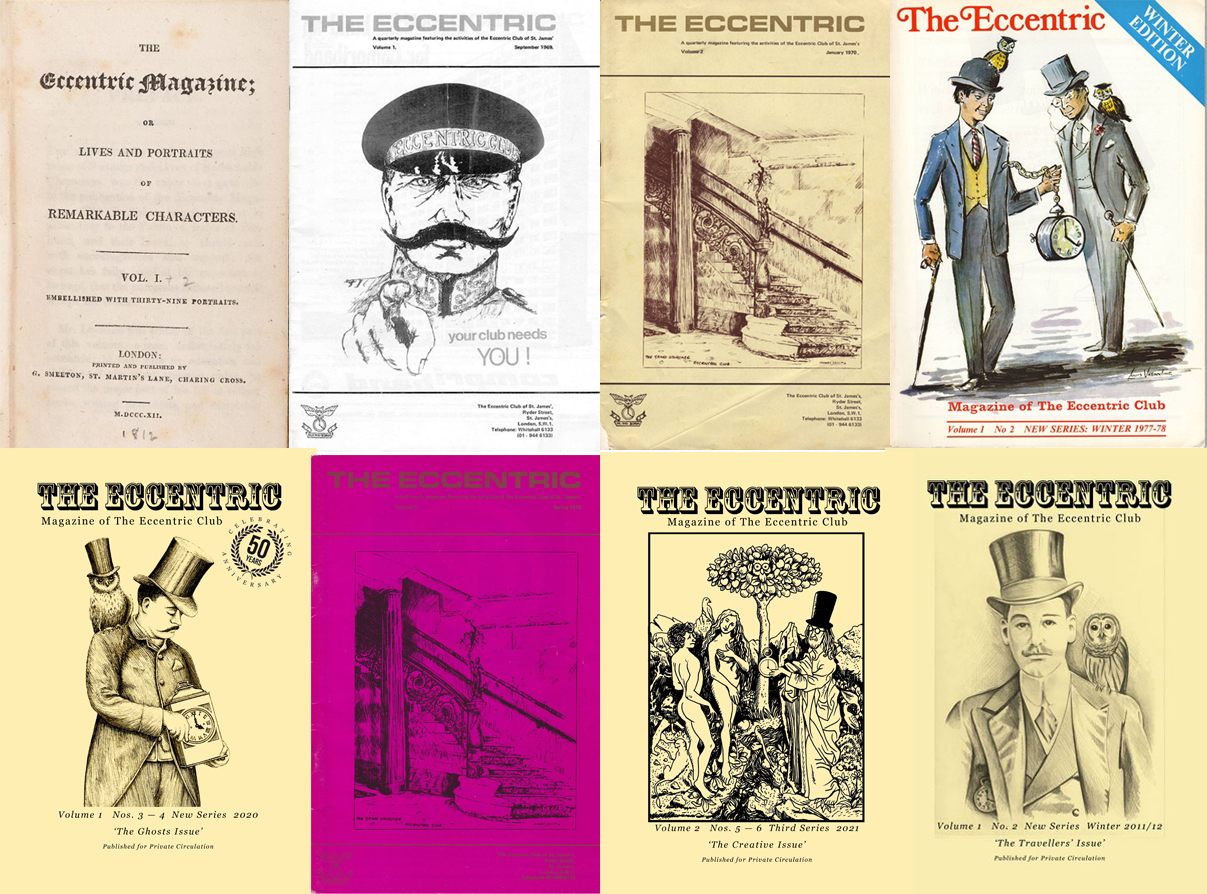
A club founded in the 1780s ought, by rights, to have possessed a magazine of comparable antiquity - and, as it happens, there was one. Between 1812 and 1820 there appeared in London an Eccentric Magazine, offering, in the frank language of its day, lives and portraits of misers and oddballs. It is almost the forebear a club such as ours might wish to claim.
Yet we claim no descent from it. But its editors have earned a paragraph, for they set a pattern - and the pattern is a cautionary one.
The first Eccentric Magazine
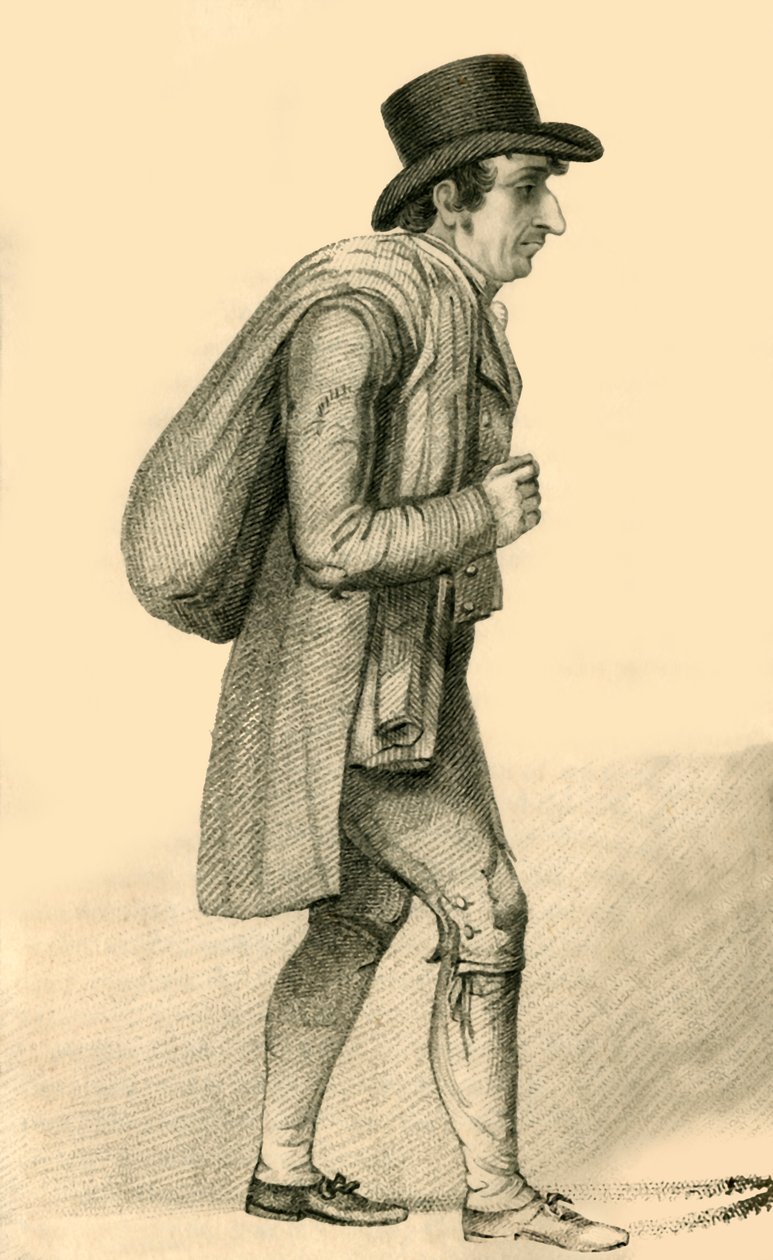 It was begun by Henry Lemoine (1756–1812), a Spitalfields bookseller of Huguenot stock who kept a stall in Bishopsgate Churchyard, sold a patent bug-water on the side, edited two magazines of the occult before this one, and died at St Bartholomew's Hospital, destitute, before the opening volume was finished.
The man who completed it was James Caulfield (1764–1826), a printseller of Old Compton Street, Soho, called upon in his day by Dr Johnson, favoured by Earl Spencer, and reduced in his final years to cataloguing at five shillings a day. He too died in penury; he too died at St Bartholomew's. The printer George Smeeton carried the form on into the 1820s; a shadowy figure named J. Arnett reissued the plates in 1819; and those copper plates were still yielding new impressions in 1880, having outlasted every one of the men who made them.
Two editors, the same charity ward, fourteen years apart. We set it down not for the pathos but because it is the founding truth of the trade: those who chronicle remarkable characters show a marked tendency to become remarkable characters themselves, and it does nothing whatsoever for their finances. The point is worth holding on to.
The First Series: Sam Morley, 1969
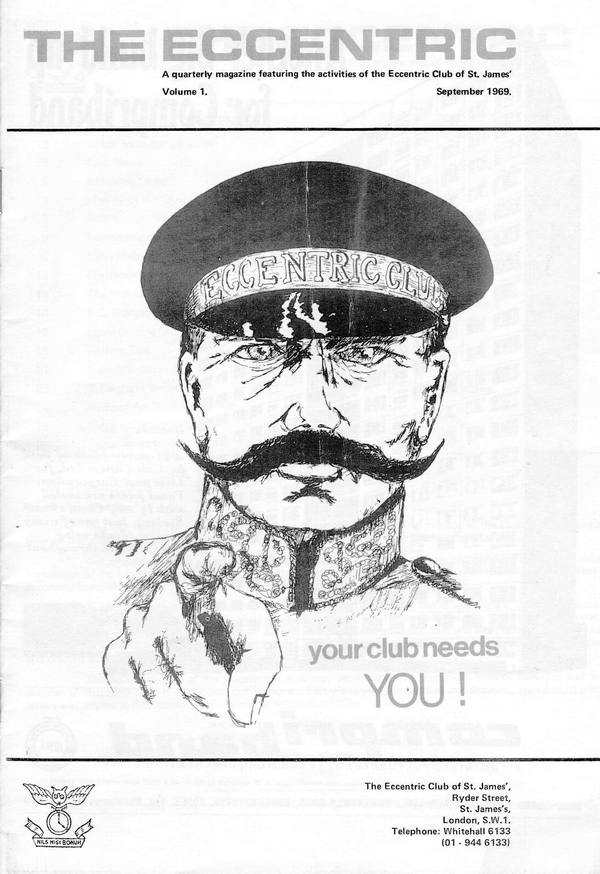
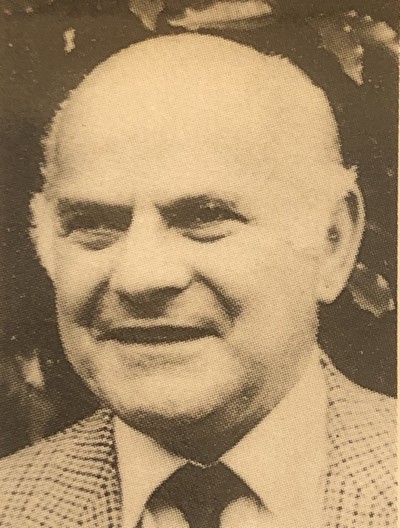 Our own magazine begins, on a happier note, at the Eccentric Club Christmas Dinner of 1968, when the President, Sir James Miller, observed that it was high time the eccentrics had a journal of their own. Until then the Club had managed only the occasional one-off - a programme here, a fundraiser there. The aim was now declared plainly: a closer bond between member and Club.
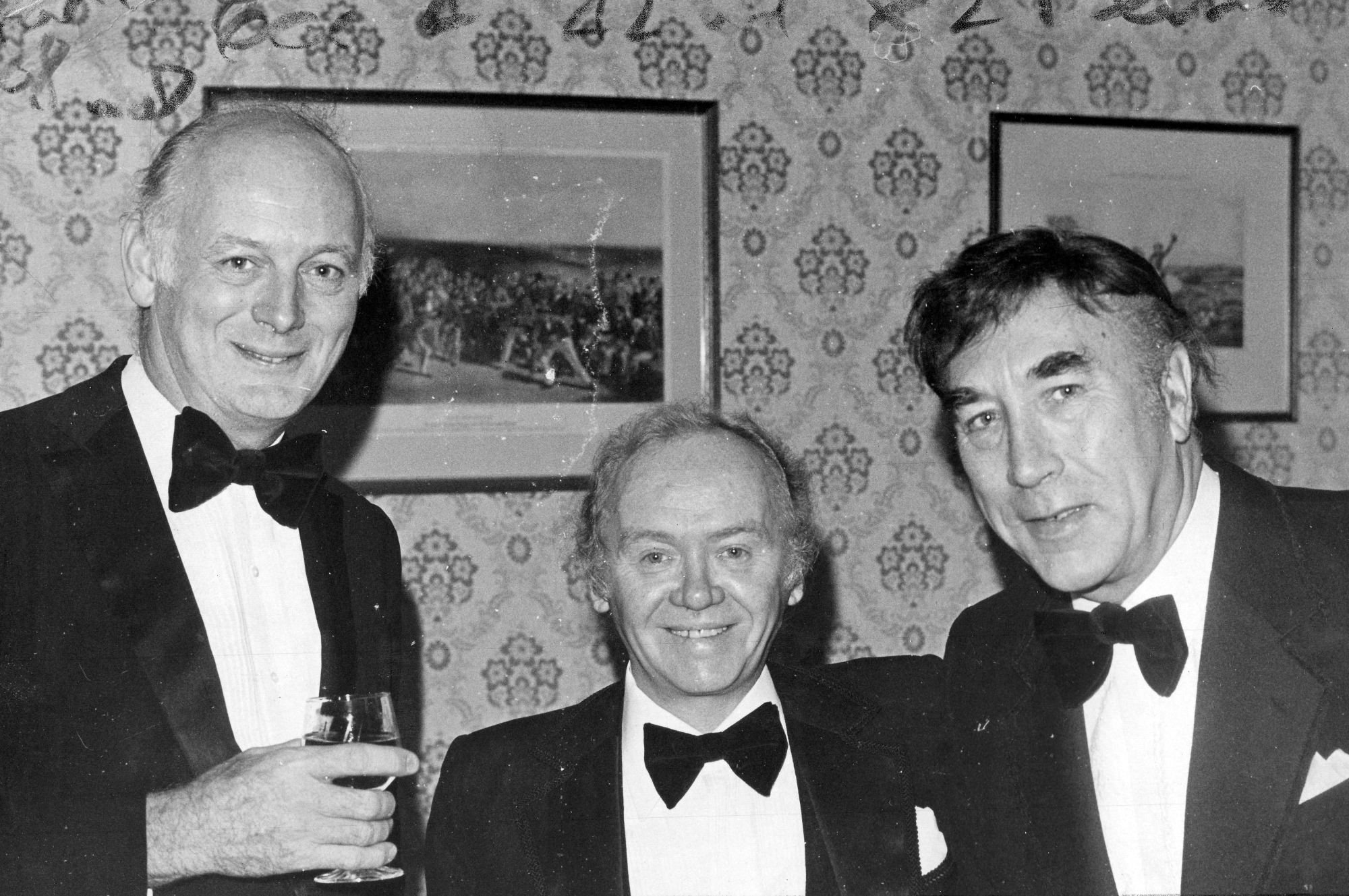
Sam Morley took up the challenge. A member, a company director in electrical services, a keen golfer and an occasional contributor to the sporting press and to Punch, he came to the work with - writing apart - no publishing experience of any kind. In September 1969 the first Eccentric appeared. It ran to twenty-six pages and, as the Club has always readily admitted, it rather looked it.
 Morley would go on to found his own imprint, Aedificamus Press, issuing volumes on golf and the building trade and, most improbably of all, the memoirs of the "Lady in White" - the soprano who sang the troopships in and out of Durban harbour - for whom he later raised a statue and was presented to the Queen. A considerable second act for a man who had begun with no publishing experience at all.
The Second Series: Afton and Frais, 1977
In 1977, Morley passed the editorship to Richard Afton, and the magazine took on a professional finish.
Afton, born in Hull in 1911, had given eighteen years to BBC Television as a senior producer - the hand behind Café Continental, the first great British variety series, and a figure so bound up with the resident dance troupe that the Lime Grove crews spoke simply of the Dicky Afton shows with the TV Toppers. He married one of them. Having made some twelve hundred programmes, he quit the Corporation in 1965 to turn television critic, and proved, by every account, a far more dangerous man on the page than he had ever been in the gallery. He died in Palm Beach, Florida, in 1985.
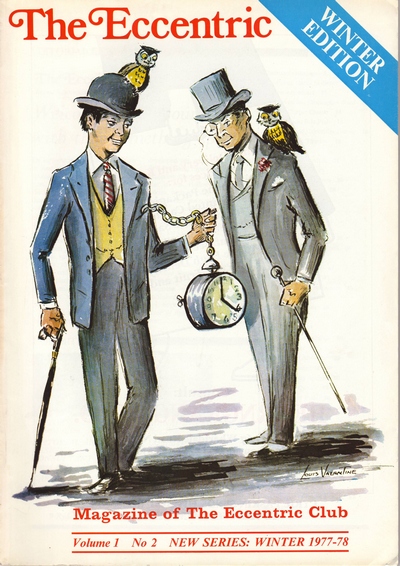 His assistant was Eric Frais - who was not, contrary to tradition, a BBC man at all. He was a wartime Army officer, a company director, and, well before Afton or the magazine, a Charig by marriage: in 1936 he had wed Doreen, daughter of Walter Charig, the Bond Street court jeweller and a past Chairman of this Club. Afton, in short, did not bring a colleague into the fold; he found a capable Club man already there - one who understood what a print run cost - and kept him close. Between them they lifted the magazine from twenty-six modest pages to a handsome ninety-six, thick with the advertising of members and their friends. In 1979, Frais was named Eccentric of the Year. (The eccentric Charigs are the subject of a separate feature in our magazine.)
The Second Series closed when the Ryder Street clubhouse did, in the 1980s, and the magazine fell silent with it.
The Third Series: revival, 2008–2026
The silence lasted the better part of thirty years. In 2008, a number of us - members of other London clubs, together with former members of the Eccentric - set about reviving the Club itself. We were generously supported in this by the Club's last President, Lord Montagu of Beaulieu, and by HRH The Duke of Edinburgh, who graciously extended his royal patronage. With the Club on its feet again, in 2010 we resolved to revive its magazine.
 The task fell to me as someone better equipped than others. I had been a journalist and reporter since 1988, writing for newspapers, glossy consumer titles, business publications and public-relations agencies, latterly as a staff writer; in time I edited several consumer magazines before moving fully into public relations, having trained in the early 1990s at the London School of Publishing. The Third Series returned to the original A5 format, settling this time at fifty-six pages, and kept faith with the old remit - Club news, articles by members, historical pieces, and the advertisements of associated businesses and friends - mixing the modern with the traditional in the established manner.
Between June and December 2013, while the printed magazine paused, a member kindly produced a monthly online newsletter, The Howler - quite different in character, yet an invaluable record of Club life and a lively source of current news.
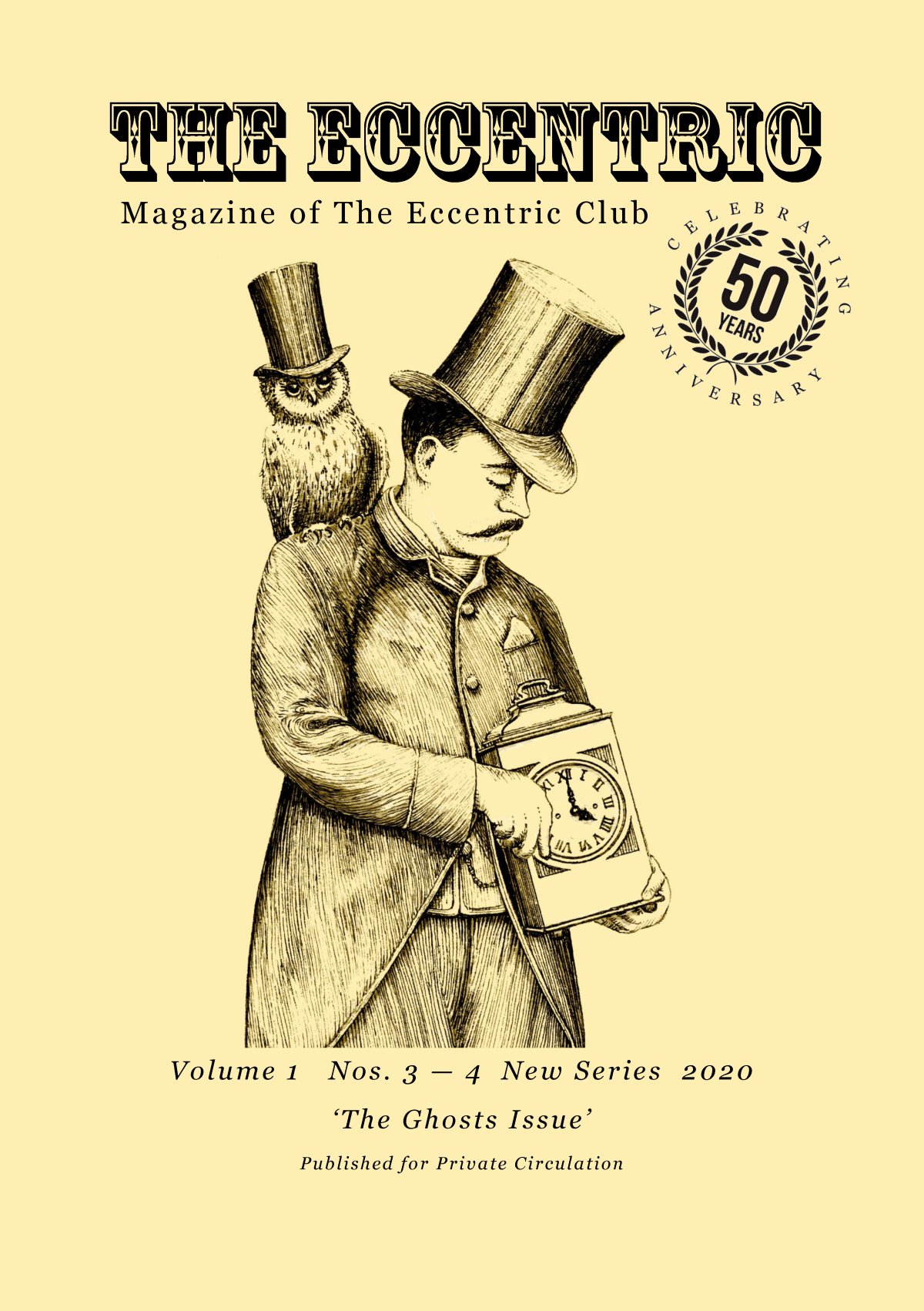
The most recent printed number, in 2020, was long overdue. With so much to report - and, sadly, a great many obituaries to carry - it appeared as a combined Nos. 3 and 4, and served also as our magazine's fiftieth-anniversary edition. We began planning the next issue directly afterwards. Then, before we quite knew it, six years had slipped by - an interval it would be charitable to call characteristic.
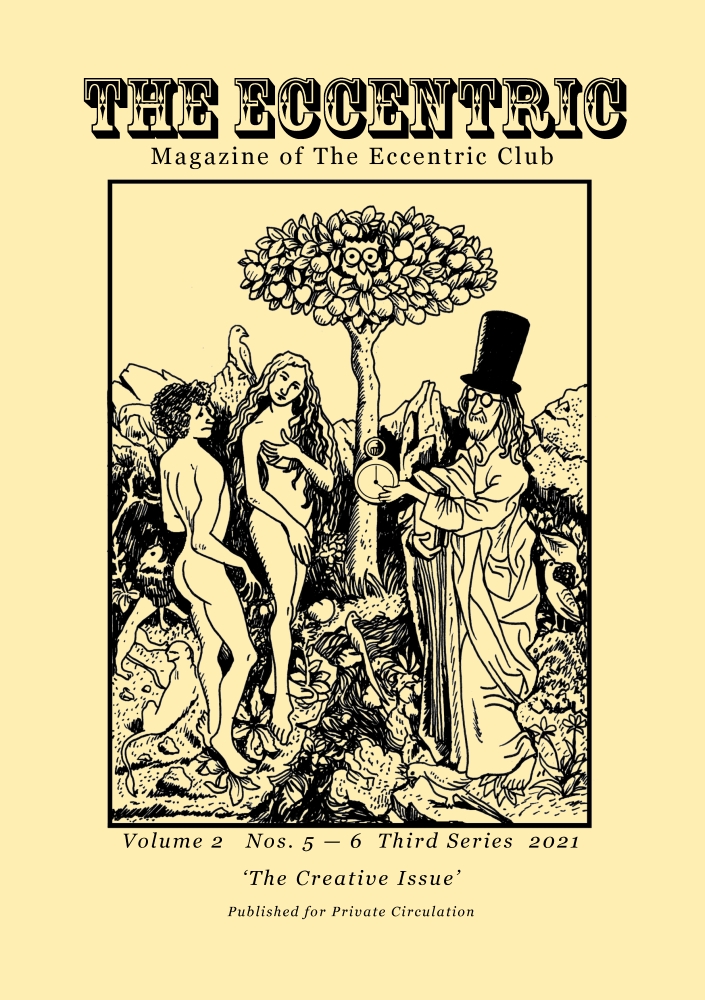
The above Nos. 5-6 never came out. Awesome drawing by Stevyn Colgan.
So, why do we go online
My own wish, at the outset, was to keep The Eccentric firmly in print, on paper of a quality our readers might touch, keep and treasure. That was always the ambition. But regularity proved steadily harder to sustain, and the volume of good material harder to marshal between covers on any dependable schedule; and in the end we came to a plainer view. A magazine published online can reach our members and reciprocal friends across the world far more swiftly, and far more surely, than any parcel of printed pages.
So from July 2026, The Eccentric is online - and it becomes, in the same stroke, something the printed magazine never could: a repository. Every new issue joins a standing, searchable archive that is always to hand, and our intention is to add to it, over time, every article from the earlier issues still available to us. Some of that material will be open to the general public; some reserved to members of the Club; and some to our commercial subscribers and advertisers.
It will be published, accordingly, in tiers. Members enjoy free and complete access, as is only right. The public are welcome to a selection, freely given. Subscribers and advertisers will find further material besides, the archive among it.
For all its printed life, The Eccentric travelled well beyond these walls - among the members of the Club, through kindred clubs in London and across England, Scotland, Ireland, Europe, the United States and South Africa, and now and then to clubs further afield still. It reached a particular readership, distinct in its interests and pursuits and well defined in standing, and so offered an unusually well-focused audience to its writers, its contributors and its advertisers. That readership now travels online with us, and we hope to gather a good many more besides.
The decision, taken in July 2026, was neither light nor easy. But we believe it will help the Club reach out to the world - and help the world's eccentrics, wherever they happen to be, to find their way rather sooner to us.
Ima von Wenden