He built it, he said, precisely because it would be good for nothing. Asked what the point of the tower was, he answered that the great point of the tower was that it would be entirely useless.
That is the whole man in a sentence, and it would be a mistake to read it as flippancy. Berners meant it as a manifesto. Everything else on the hill had been built for a purpose - an Iron Age fort, Matilda's castle, Cromwell's battery - and every one of those purposes had involved killing somebody. He proposed, in 1935, to add a structure with no purpose whatsoever. It is arguably the most civilised thing anyone has ever done to a strategic hilltop in the Thames Valley.
The learner
Gerald Hugh Tyrwhitt was born in Shropshire in 1883, raised largely by an aggressively pious grandmother and a mother he considered under-supplied with intellect and over-supplied with prejudice. The formative anecdote arrives early and tells you everything. Having overheard that a dog may be taught to swim by throwing it into water, the young Berners threw his mother's dog out of an upstairs window to teach it to fly. The dog was unharmed; Berners was thrashed and, in the way of that household, locked in a cupboard.
The child who tests a proposition to destruction and gets beaten for it grows into the man who builds a tower to prove that towers need not do anything.
He came into the barony in 1918, took Faringdon House the following year, and set about becoming - with real seriousness - a composer, a painter and a novelist, none of them as a hobby. Diaghilev commissioned him. Stravinsky was a friend. The house filled up with the century: the Sitwells, Gertrude Stein, Cecil Beaton, Rex Whistler, Constant Lambert, Max Beerbohm, Salvador Dalí, the Betjemans, the Mitfords. Nancy Mitford put him in The Pursuit of Love as Lord Merlin, which is the closest thing to canonisation English letters can manage.
The household
The stories are famous, and they are famous because they are true.
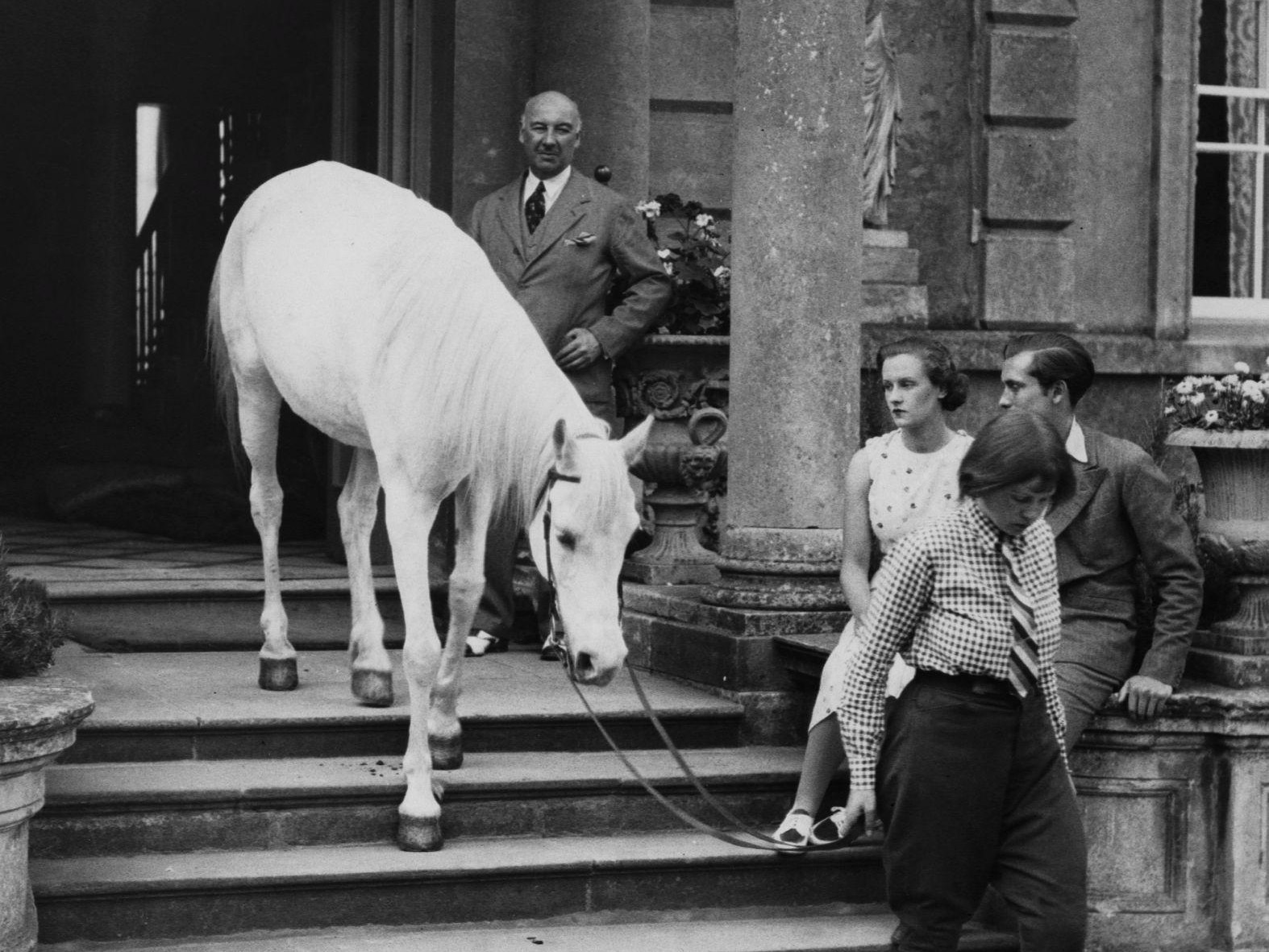
The pigeons at Faringdon were dyed in vibrant pastels, with a harmless vegetable dye - a tradition the house has never abandoned. The Rolls-Royce carried a small clavichord, which stowed beneath the front seat. Penelope Betjeman's horse, Moti, was entertained to tea in the drawing room. The dogs wore pearl necklaces from Woolworths; when a guest reported anxiously that one had gone missing, Berners sighed and said he would have to get another out of the safe. He drove about the estate in a pig's-head mask to alarm the neighbourhood.
He was a connoisseur of the notice. Dogs will be shot and cats whipped. No dogs admitted, at the head of the stairs. And, inside a guest wardrobe, the instruction: prepare to meet thy God.
The malice, when it came, was aimed strictly upward. Lending his house in Rome to friends, he armed the butler with the calling cards of London's most notorious bores and instructed him to send one or two round each day - Berners at home in England, imagining his guests diving behind the furniture at every ring of the bell. He once secured the presence of the society hostess Sibyl Colefax at dinner by hinting that the Prince of Wales would attend. She abandoned everything and came. She dined with the Provost of Worcester.
And there is the Dalí business, which no novelist would be permitted. Berners thought Dalí should open the 1936 London Surrealist exhibition in a deep-sea diving suit and rang to hire one. How far, asked the shop, did Mr Dalí wish to descend? To the depths of his subconscious, said Berners. In that case, said the voice, he had better have a special helmet. Dalí, having nearly drowned rehearsing in the lake at Faringdon, then very nearly suffocated inside the thing on the platform in London.
A hundred feet of nothing
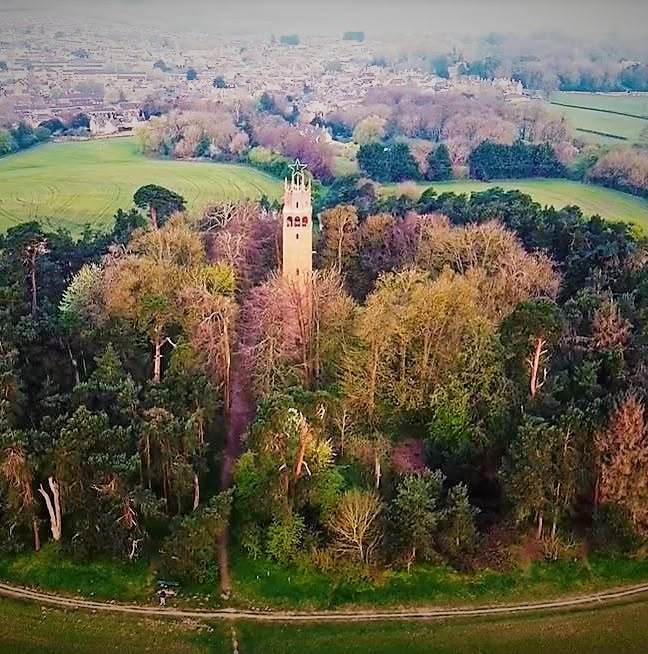
Faringdon Hill had been called 'The Folly' for centuries before Berners touched it - an old word for a leafy hilltop as much as for a foolish act. He simply took the pun literally. The town objected; the planning fight ran through the papers; the Ministry granted his appeal in October 1934, having first been given an excellent lunch at Faringdon House.
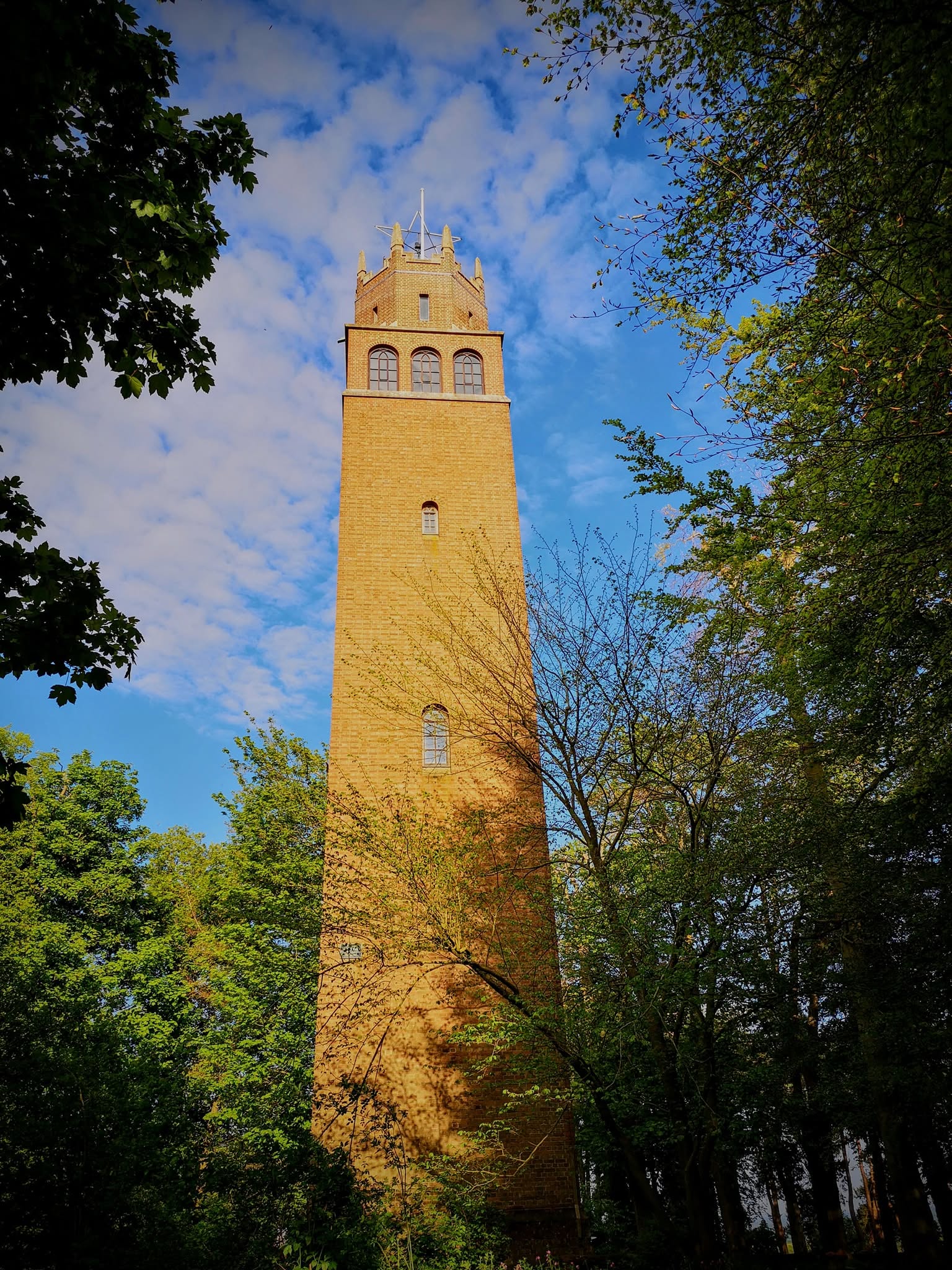
The architect was his friend Lord Gerald Wellesley, later Duke of Wellington. Human skeletons came up with the foundations, and the Keeper of the Ashmolean was summoned to look at them. Then Berners went abroad; and returned to find that Wellesley had raised him a chaste classical shaft. He ordered the octagonal top storey rebuilt in flamboyant Gothic. The result is a tower that argues with itself all the way up, and is much the better for it.
It was a birthday present for Robert Heber-Percy - the Mad Boy, twenty-eight years his junior, who had moved into Faringdon in 1932 and would inherit it. Heber-Percy's recorded response was that he would rather have had a horse.
And at the entrance, the notice that has outlived every ballet Berners ever wrote: members of the public committing suicide from this tower do so at their own risk.
On Guy Fawkes Night 1935, he threw a Tower Warming. In 1936, he painted the thing for Shell's "To Visit Britain's Landmarks" campaign, and his brand-new folly went out on the sides of petrol lorries alongside follies three centuries older. By 1937, it was already being advertised as Faringdon's Famous Folly. He had manufactured an ancient monument in twenty-four months.
The dark under the joke
It is customary to leave him there, on the hill, laughing. That would be a lie of omission.
Berners suffered from depression all his life. It deepened sharply in the war - a war that appalled a man with no politics to speak of - and he had a nervous breakdown, and spent a period living in lodgings in Oxford, where Maurice Bowra found him work cataloguing books. After his last ballet, Les Sirènes, in 1946, he lost his sight. He died at Faringdon House in 1950, aged sixty-six, and left everything to Heber-Percy.
The clown was, throughout, a professional composer whom Diaghilev took seriously, working through a lifelong illness that the pink pigeons were partly designed to outshout. Both things are true at once. That is generally the case with the funny ones.
He wrote his own epitaph, and it is the last word on him:
Here lies Lord Berners
One of the learners.
His great love of learning
May earn him a burning
But praise to the Lord!
He seldom was bored.
It is inscribed, in part, around the rim of the blue plaque unveiled at the Folly in 2013 - by Sofka Zinovieff, Heber-Percy's granddaughter, who has written the family's own account of the house. The tower still stands. The doves are still dyed. Faringdon has put the silhouette on the gin.
Entirely useless, and still working, ninety years on.
*For the avoidance of any doubt, Gerald Hugh Tyrwhitt-Wilson, 14th Baron Berners (18 September 1883 – 19 April 1950), was not a member of the Eccentric Club. At least, not to our knowledge.