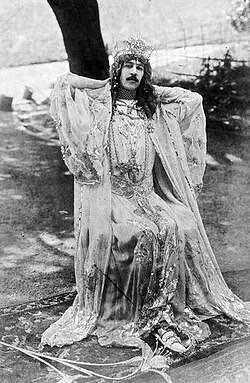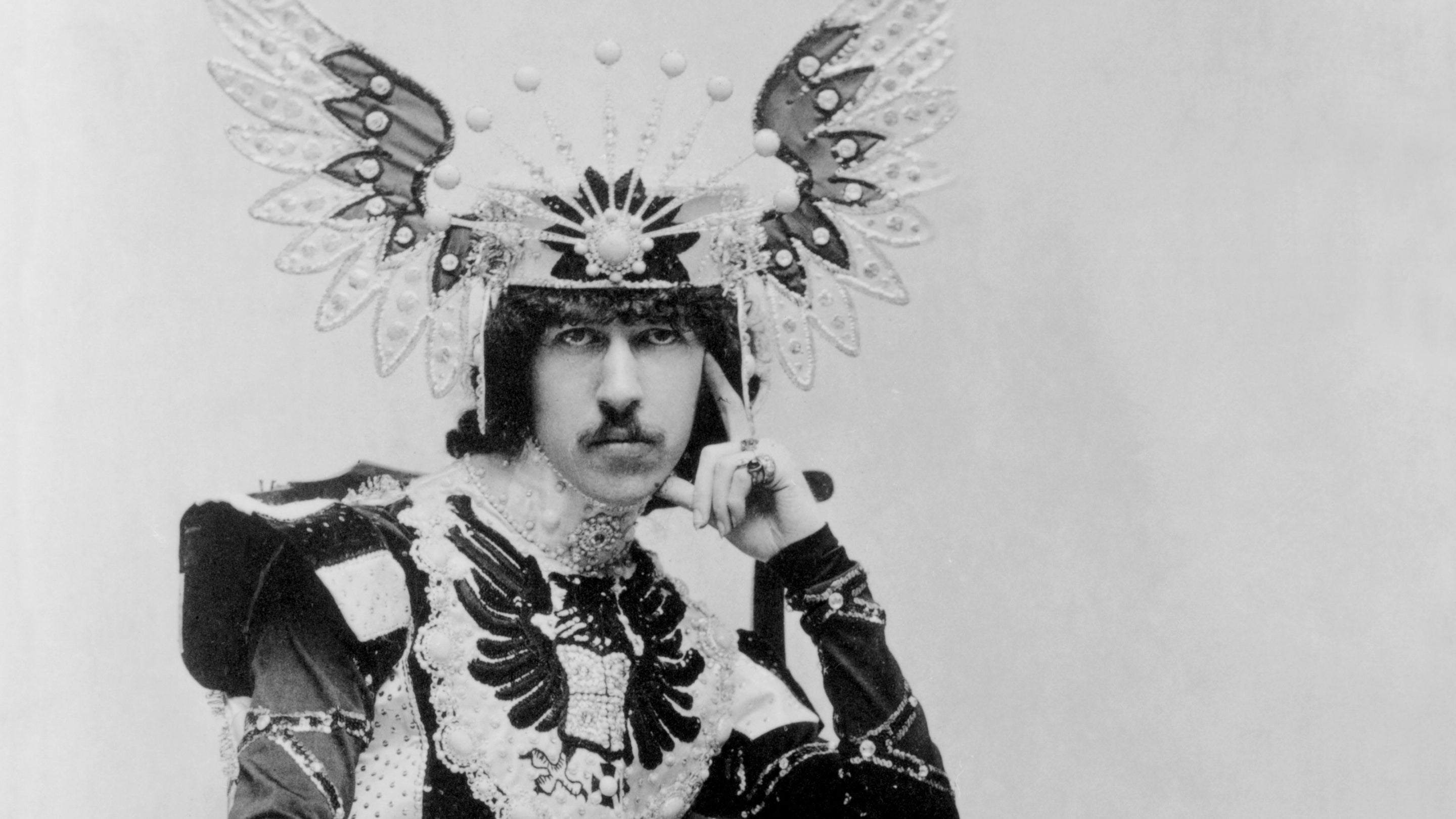
There is a photograph. You will have seen it, even if you do not know that you have: a slender young man draped across a chair in a jewelled gown, winged headdress aloft, furs pooling at his feet like spilt cream, rings catching the studio lamps. The eye insists it is a rock star - Bolan, perhaps, or Bowie in his Kabuki phase. The eye is wrong by roughly eighty years. It is 1900, the sitter is a marquess, and he owns most of the island he is standing on.
Henry Cyril Paget, 5th Marquess of Anglesey, known to intimates as "Toppy", is the great scandal that British society sealed in the wall and hoped would stop knocking. It has never stopped knocking.
An heir of dubious provenance
He arrived in Paris in June 1875, and the circumstances of that arrival were, from the outset, the subject of sotto voce speculation in every drawing room that mattered. His father was the future 4th Marquess; his mother, Blanche Mary Boyd, died when the boy was two, and there was much whispering about his true paternity, with a persistent rumour naming the French actor Benoît-Constant Coquelin. He was then fostered in Paris by Coquelin's sister until the age of eight. Whether or not the theatre was in his blood, it had certainly been in his nursery.
He was eight when he was finally brought to Ynys Môn, to the family seat at Plas Newydd - an upbringing that appears, in the surviving fragments, to have consisted of an elderly nanny, a great many dogs, and the Menai Strait. Eton followed, and - with a comedy of miscasting that no screenwriter would dare invent - a lieutenancy in the Royal Welsh Fusiliers.
Then, in 1898, the doors flew open. His father died, and at twenty-three he came into some 30,000 acres across Anglesey, Staffordshire, Dorset and Derbyshire, and an income of £110,000 a year - the thick end of £12 million in today's money. He had, one might say, been handed the keys to the sweetshop. He proceeded to eat the sweetshop.
The reign of the Gaiety
The estate had barely been buried before it was being redecorated. He rechristened Plas Newydd "Anglesey Castle" and converted the family chapel into a 150-seat playhouse, which he named the Gaiety Theatre. Deconsecrating the chapel, in the Wales of 1900, was not an eccentricity. It was practically a declaration of war.
What followed was six years of magnificently unhinged expenditure. Clothes, furs, jewels, cars, boats, perfumes, toys, chocolate, parrots, dogs, horses - and, above all, theatre. His motor cars were fitted with pipes that dispensed scented vapour in place of exhaust fumes. He is said to have promenaded along Piccadilly with a white poodle under one arm, tied with pink ribbon, in the manner of a man walking a rather expensive handbag.
Beginning with a company of friends, servants and local people, and from 1901 with a professional manager and troupe installed at the Gaiety, he staged productions for neighbours, tradesmen, servants and university students - free of charge. That last detail is the one his obituarists conveniently mislaid.
The Dancing Marquess did not perform for London. He performed for Bangor.
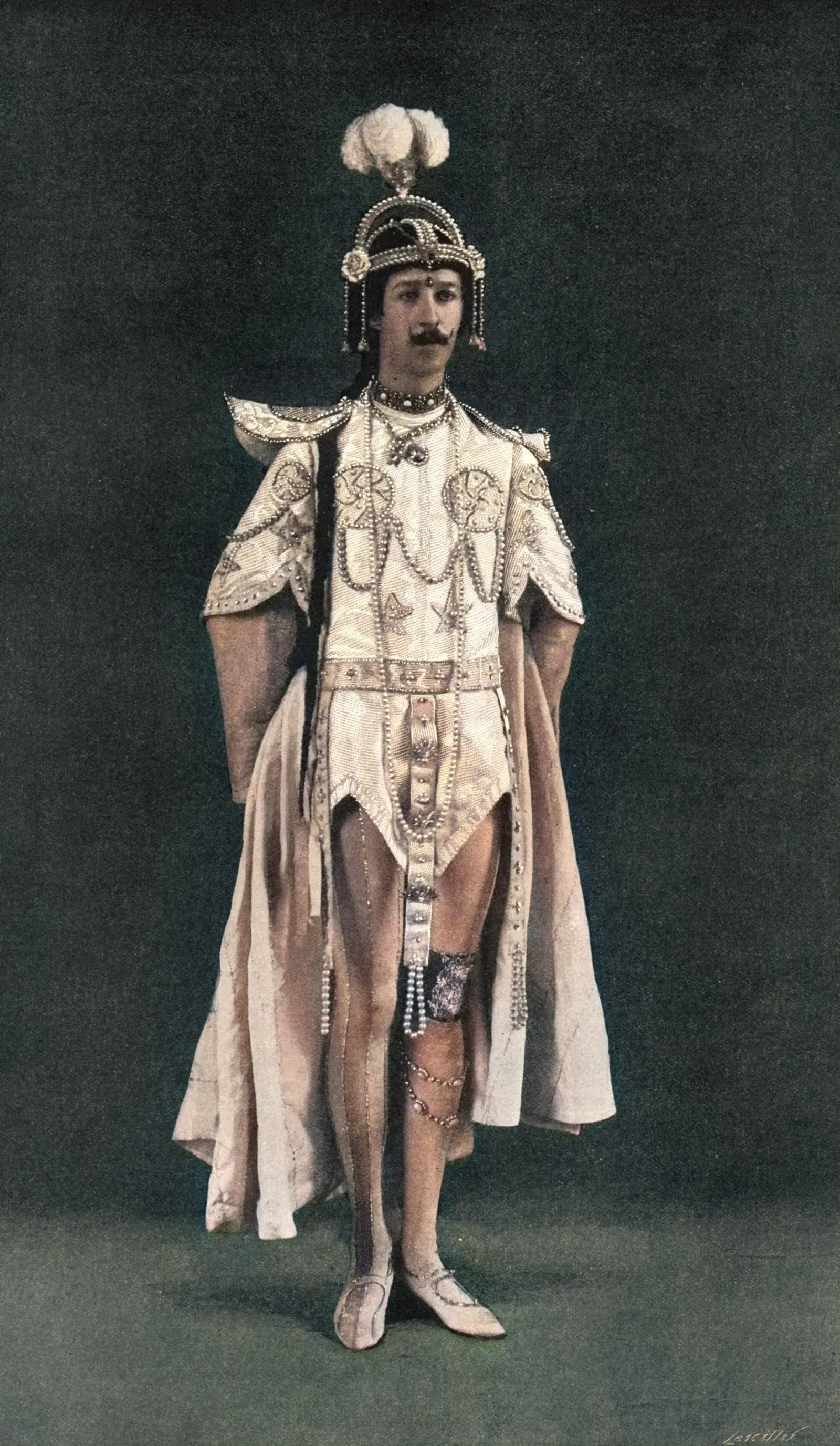
And how he performed. The sobriquet came from his Butterfly Dance, lifted from Loïe Fuller, in which a great cloud of transparent white silk was worked like a pair of wings. Coloured lights played over the silk while he moved. Afterwards he would distribute photographic postcards of himself - reclining on a chaise longue in his costumes, or posed at the wheel of one of his motors. The selfie, in short, arrived in Wales some hundred and twenty years ahead of schedule, and it arrived in a tiara.
The marriage, meanwhile, was proceeding along lines that a modern audience would recognise instantly and an Edwardian one preferred not to. He had married his cousin Lilian Chetwynd in January 1898; on honeymoon in Paris he is said to have bought an entire jeweller's window display for her, and to have contented himself with admiring her, hung with emeralds and rubies, as the nearest the two came to intimacy. The union was annulled, then converted to a legal separation in 1901. She was, by every account, the great friend of his life.
The great undoing
Arithmetic is the least forgiving of critics. He was declared insolvent in 1904, and the auctioneers took possession of the house that June. The Great Anglesey Sales opened on 29 July: between 17,000 and 18,000 lots, from the costumes and the five motor cars and the pet dogs down to the pots, pans and mop heads. Servants who had lost both home and employment came to bid for the belongings out of their own rooms. Some of his creditors turned up and bid, too - to help him. One struggles to think of a bankruptcy in the annals of the peerage that was attended with more affection.
He gave interviews afterwards, which was very like him. To the Daily Mail, ruined and six months from death, he apologised for not appearing in peacock-blue plush, ropes of pearls and ruby-studded slippers, and observed that "I prefer, and always have preferred, Scotch tweed." It is the funniest line any bankrupt has ever delivered, and quite possibly the saddest.
He decamped to Monte Carlo on a modest allowance, mentioned a gambling system he had devised, and died there on 14 March 1905 of pneumonia, having contracted tuberculosis. He was twenty-nine. His ex-wife was at his side. He was brought home to St Edwen's Church at Llanedwen, and The Times recorded that the people of Bangor, who knew perfectly well what he had been, were sorry to lose him.
The family's revenge was immediate and thorough. The cousin who inherited destroyed every one of his papers and turned the Gaiety back into a chapel. The Bystander pronounced him the finest argument against hereditary privilege that any revolutionary could hope for, and the Complete Peerage dispatched him with a sniff so glacial it is still cooling the room.
They erased him, and it did not take.
The costumes are gone, the diamonds are scattered, the papers are ash - and yet there he remains, in a handful of photographs, wings outstretched, entirely unbothered.
And now, his close-up
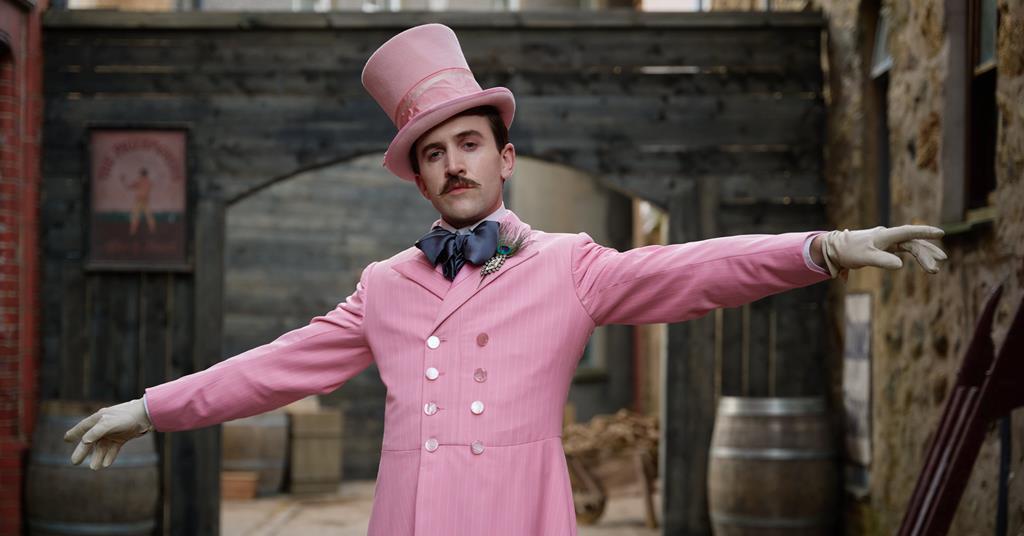
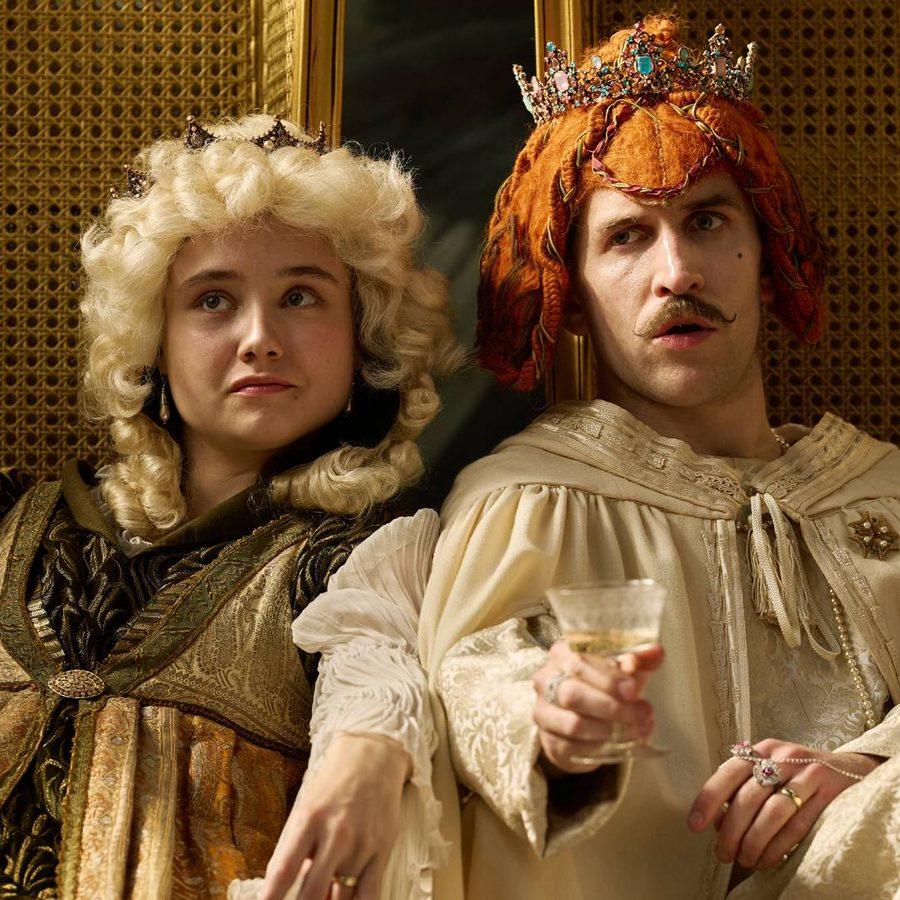
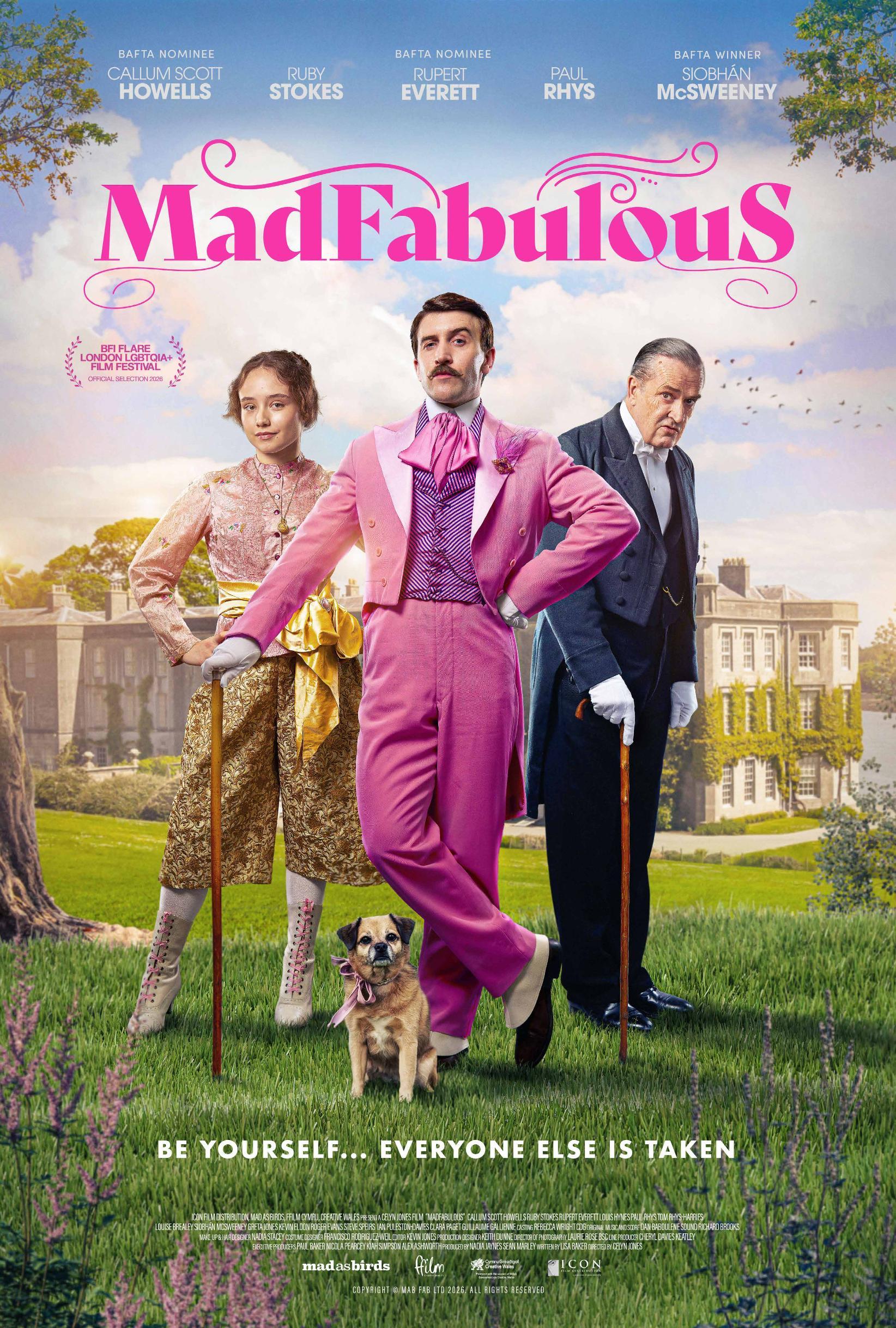
He has waited a century for the medium he was always meant for. Madfabulous, directed by Celyn Jones from a debut screenplay by Ynys Môn-born Lisa Baker, stars Callum Scott Howells as Henry, with Rupert Everett, Ruby Stokes, Paul Rhys and Siobhán McSweeney. It premiered at BFI Flare in March 2026 and opened in UK cinemas on 5 June via Icon. It was shot at Plas Newydd itself, with a distant Paget relation, Clara, playing the head of Henry's theatre company.
Jones has said the project began with the photograph - that he took it for a Ziggy Stardust sleeve before realising it was an 1890s marquess, and he has promised a life revisited "with a disco lens and a punk heart." He also reports that Henry, once a picture hung near the lavatories at Plas Newydd, now has a room of costumes to himself - and that in Bangor the film outsold everything since Barbie.
*For the avoidance of any doubt, Henry Cyril Paget, 5th Marquess of Anglesey, was not a member of the Eccentric Club. At least, not to our knowledge.