There was a period in the eighteenth century when a fashionable person could rent a pineapple.
Not eat it. Rent it. One collected the fruit from a shop, carried it about the place for an evening - to a dinner, to the theatre, tucked under the arm with elaborate nonchalance - and returned it the following morning, presumably a little bruised, to be hired out again to the next aspirant. The pineapple was not food. The pineapple was a statement, and the statement was: I am the sort of person to whom the tropics are answerable.
The truly committed, naturally, declined to rent. The truly committed grew their own.
This required, in the climate of the British Isles, a structure of such lunatic ambition that it is a wonder any of them survived the accounting. It was called a pineapple pit: a glazed trench sunk into the earth, flanked by two further trenches, into which one shovelled fifteen tonnes of fresh horse manure. As the dung fermented, it threw off heat; the heat was ducted through cavities in the brickwork into the central bed, and there, in a fug of tropical warmth generated entirely by rotting excrement, the pineapple grew.
It took two years. It cost - even by conservative modern reckoning, once one has priced in the manure, the glass, the maintenance and the labour of the men who turned it - well north of a thousand pounds a fruit.
And there is precisely one of these things still working in Britain. It is at Heligan, in Cornwall, and it has been producing pineapples for thirty years. The gardeners ate the first one, which is exactly as it should be. The second was sent to the late Queen.
Members will want to sit down before I tell them the rest.
Four hundred years of Tremaynes
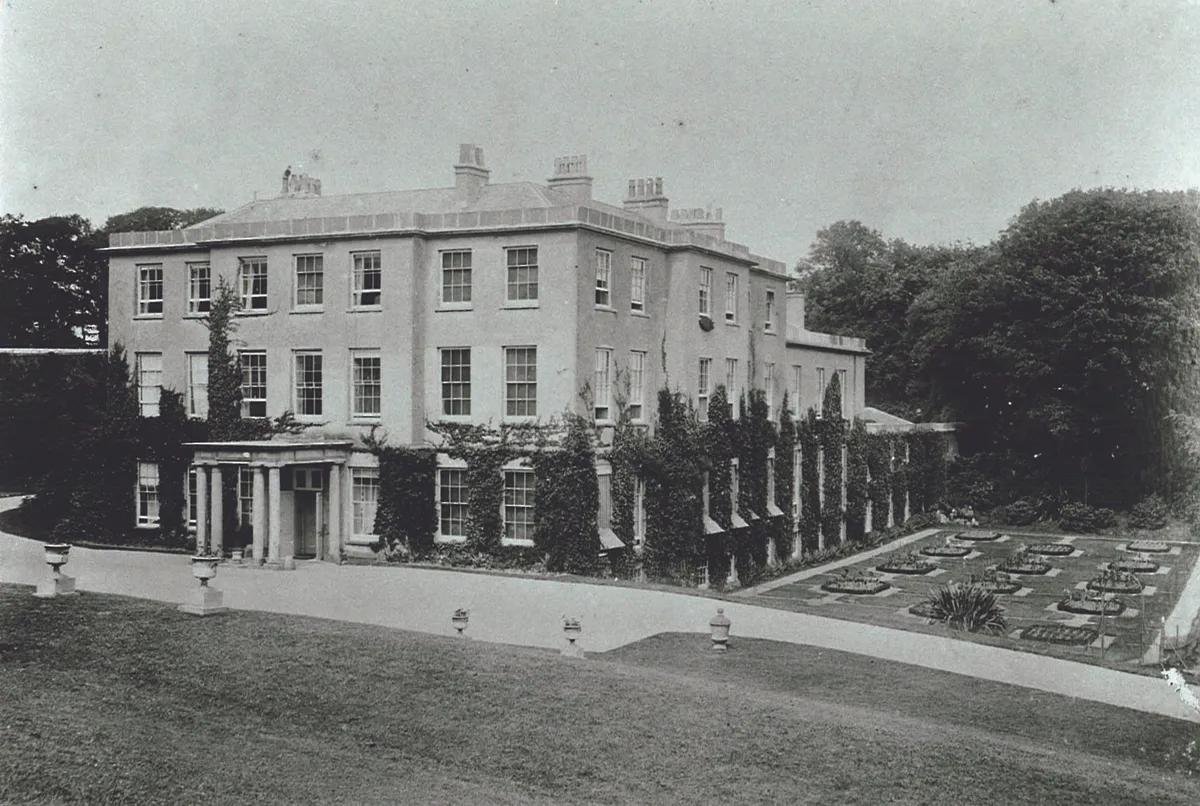
Heligan belonged to the Tremayne family for something over four centuries, which is ample time for a bloodline to acquire eccentricities and act upon them at scale. From the 1780s onwards, successive squires set about the estate with the particular fervour of the English gentleman who has read a great deal, travelled a certain amount, and has more valley than he strictly knows what to do with.
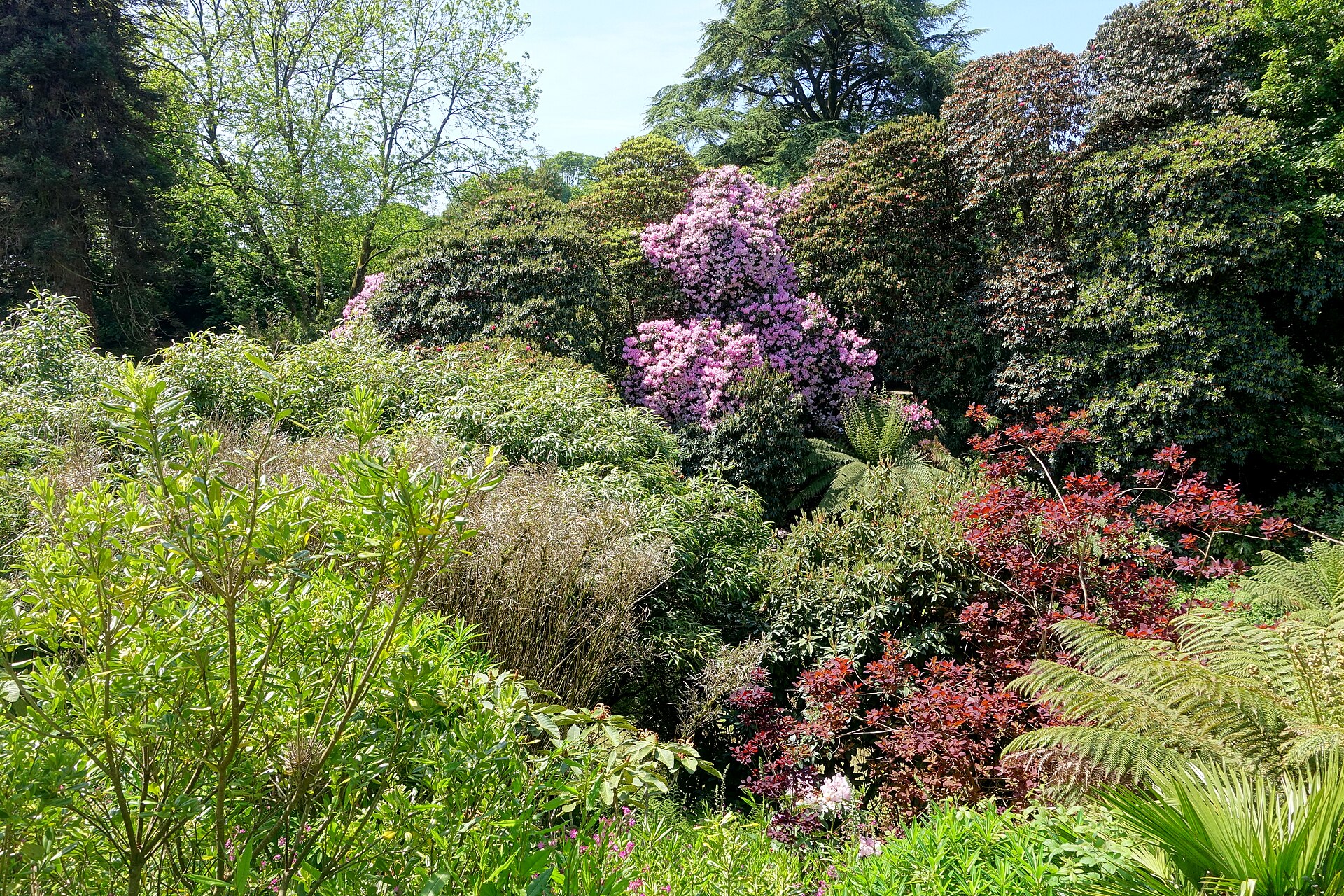
They planted rhododendrons that are now a century and a half old. They laid out an Italian garden and a ravine. They built follies, rides, walks, bee boles, a melon yard. They drove an ornamental avenue up from Pentewan for no better reason than that a coal road ought to be beautiful. And down the warm southern slope towards Mevagissey, they created something no other English family attempted: a subtropical valley of tree ferns, bananas and bamboo, known - without irony, and without apology - as the Jungle.
By 1900 it took twenty-two gardeners to hold the whole enterprise back from the brink.
Then came August 1914.
The Thunderbox
The men went. The estate emptied. Heligan House became a convalescent home for wounded officers, and the gardens were left - not sold, not developed, not carved into a golf course, merely left, which in Cornwall is the most comprehensive form of destruction available. Bramble came, and ivy, and seventy years, and by the 1970s the house had been sold into flats and the gardens had become a rumour that the local people half believed.
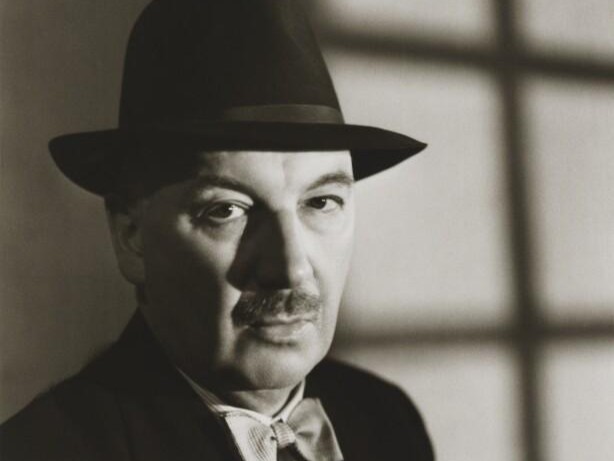
On the night of 25 January 1990 a great storm went through the West Country and knocked the entire tangled ruin sideways. Into the wreckage, with machetes, went Tim Smit - a Dutch-born former record producer who had come to Cornwall intending to farm rare-breed pigs, and who would later build the Eden Project a few miles up the road - together with the builder John Nelson, at the invitation of John Willis, a Tremayne descendant who had inherited the mess.
Hacking into a corner of a walled garden, they broke open a tiny buried room. It was the gardeners' privy. On the flaking lime plaster, written in pencil, was a column of names. Above them, in the dry and unimprovable humour of the Edwardian working man, a motto:
Don't come here to sleep or slumber.
And beneath the names, a date: August 1914.
They had signed the wall of the lavatory on their way to the war, as men do, meaning nothing by it. Thirteen of Heligan's outdoor staff went. Nine did not come back - more than a third of the team. The garden they had left, in the entirely reasonable expectation of returning to it, then spent seven decades being swallowed alive.
The Imperial War Museum has since entered that privy into the National Inventory of War Memorials. It is called the Thunderbox Room. It is, I would submit, the finest war memorial in England, precisely because nobody designed it as one.
The restoration that followed - the largest in Europe, prosecuted with a bloody-mindedness the National Trust could only envy - was undertaken explicitly in those men's names. Not as heritage. As repayment. And that, more than the palms or the pineapples, is what gives Heligan its moral weight:
it is the only great garden in Britain that exists as an act of restitution to its own staff.
The rest of the wonders
Having wept, one is permitted to marvel.
The Jungle runs down a valley several degrees warmer than the gardens above, boardwalked, hung with tree ferns and gunnera the size of parasols, terraced with four ponds. Slung across it is a Burmese rope bridge - a hundred feet of swaying insolence, one-way, no turning back once committed. It is the only such bridge in the country, and the only place in England where one may watch a grown man in Boden shorts undergo a genuine crisis of faith.
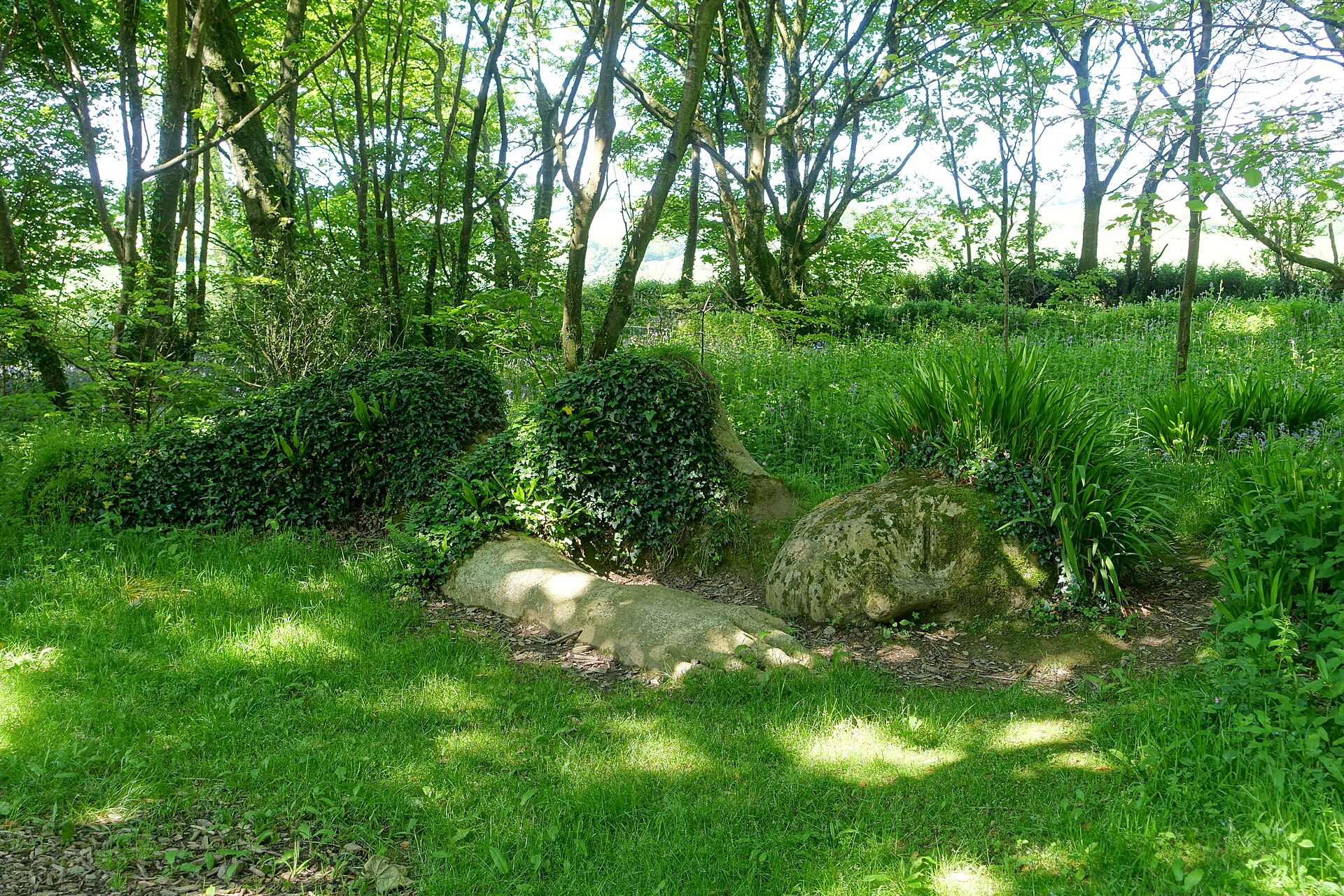
The living sculptures lie along the Woodland Walk. The Giant's Head grew from a tree root ripped up by the very storm that revealed the gardens; his eyes are chips of china and glass turned out of the soil during the restoration, which is a form of poetry that no committee could have arranged. Nearby sleeps the Mud Maid, made in 1998 by the Cornish artists Sue and Pete Hill - ivy for clothes, moss for hair, her face originally painted with yoghurt to persuade the lichen to take. Being alive, she changes with the seasons: green and lush in May, gaunt and grey by February. She ages, in short, as the rest of us do, but with markedly better bone structure. Further on, easily missed, stands the Grey Lady, drawn from the estate's own ghost.
A word to the practically minded
Heligan lies near Pentewan, five miles from St Austell, and is open daily; booking ahead is advisable and the ticketing is unsentimental about rain. Two hundred acres, arranged on a hill with real Cornish malice - the Jungle is down, and one must come up again. Four hours is the floor. Dogs welcome. Sensible shoes obligatory.
It belongs to no Trust and no Society. It answers to nobody. Which, fellow members, is entirely the point.
Go for the pineapple, by all means. Stay for the palms. But find the Thunderbox, and stand in it a moment, and read what is left of the names.
Don't come here to sleep or slumber. They were joking. It became a prophecy. And then, seventy-six years later, somebody came in with a machete and woke the whole place up.