I’m proud to be considered an eccentric and to be part of this illustrious club. And I’m equally proud to be a Cornishman. Thankfully, eccentricity and the Duchy of Cornwall (never a county) go hand in hand, and that beautiful part of the South-west has produced more than its fair share of original thinkers, mostly in the form of clergymen. I’m going to feature two of them in this article – Robert Hawker and Frederick William Densham.
Hawker is the better known of the two, mainly because he penned the words to what many Cornish people consider to be their national anthem. The Song of the Western Men (often referred to by the simpler title of Trelawny) was penned ‘under a stag-horned oak in Sir Beville's Walk in Stowe Wood’ and sent anonymously to a Plymouth newspaper accompanied by a letter that subtly suggested that it was an old lyric that had been ‘re-discovered’. The poem – which told the story of Bishop Sir Jonathan Trelawny, one of the seven seditious bishops who had a major role in the Glorious Revolution of 1688 that deposed James II - was an immediate hit. It was championed by such luminaries as Sir Walter Scott and Charles Dickens, and soon became attached to a popular old folk tune (the same tune that we also apply to The Grand Old Duke of York). Consequently, it soon became part of the regular set-list for Cornish male voice choirs.
But, of course, it was all a bit of a practical joke by Hawker who was happy to later claim authorship. It was just one of many pranks he pulled in his lifetime.
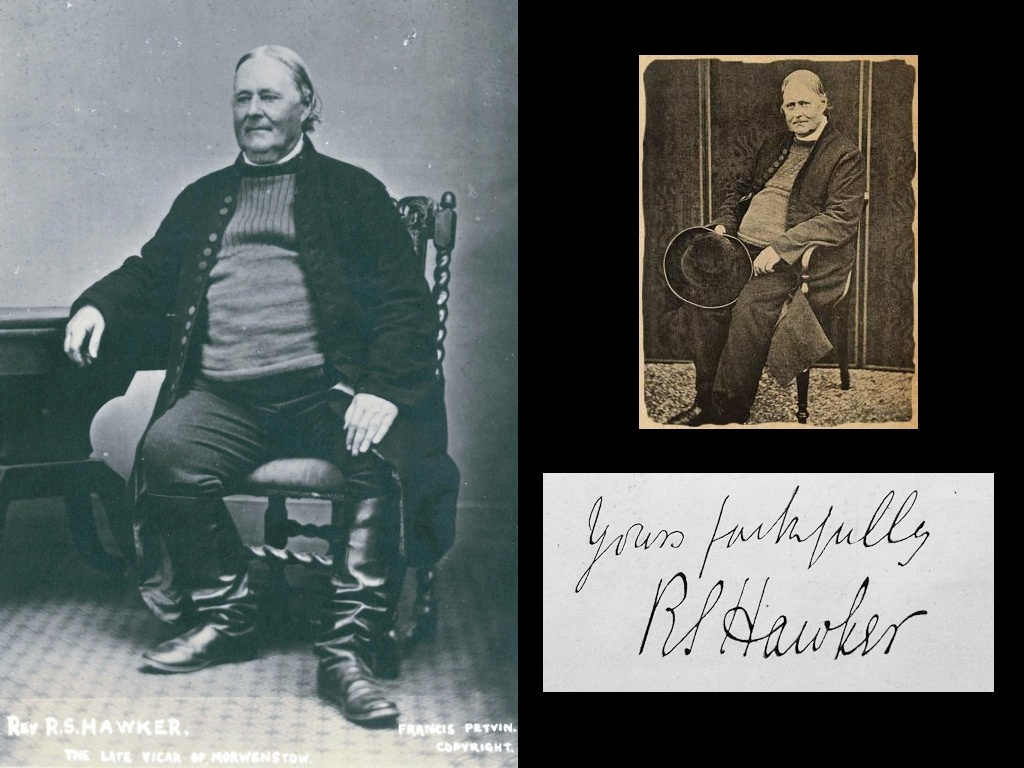 Robert Stephen Hawker was born in Plymouth, Devon, in 1803 and became the Vicar of Morwenstow in Cornwall in 1834. And, from the moment he arrived, he made something of an impact. For a start, he refused to wear black, except for his socks. Instead, he favoured a brown cassock with velvet cuffs, a plum-coloured coat, a blue fisherman's jersey, scarlet gloves, long Wellington boots and a wide-brimmed pink hat. Occasionally, he would sport a poncho-style yellow horse blanket, which he called the ‘ancient habit of St Pardarn’. His wife, who was also his godmother and 22 years his senior, also shared his non-traditional sense of style and would wear complementary outfits when out walking with him. The Hawkers were married for 31 happy years and, at her funeral, Robert showed his respect by wearing a bright pink fez.
From his earliest years, Hawker had been spellbound by the myths and legends of Cornwall. In 1864 he published The Quest of the Sangraal: Chant the First, the first part of an unfinished epic poem about the Arthurian legends. And, during the summer months, he liked to dress up as a mermaid and sit in a rock in the sea for no other reason than to astound or frighten visitors.
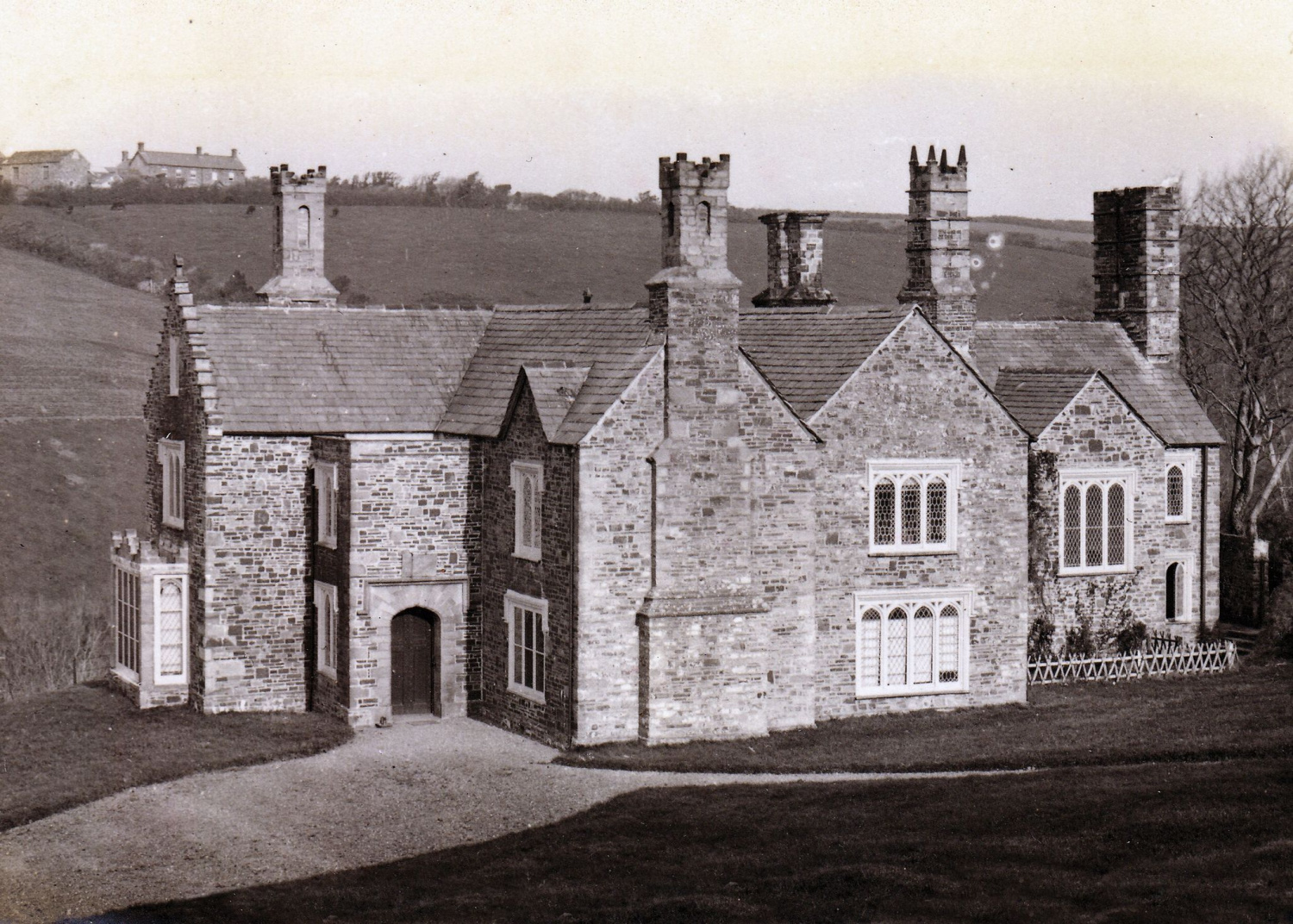
He loved animals and regularly held conversations with birds. He would parade around the village with an enormous pig on a leash, and he encouraged animals to come to church as ‘they too had been on the ark’. Consequently, the place was always untidy; the altar cloth was covered in dog and cat hairs and spent matches, and he often took his nine pet cats into services, though it’s claimed that he excommunicated one of them for mousing on a Sunday. He made some adjustments to the church too, such as removing the panels around the base of his pulpit so that the congregation could see his feet, and narrowing the passage up to the pulpit as he delighted in watching fat visiting priests get stuck. But perhaps his most extraordinary addition to the parish buildings was having five of the rectory chimneys rebuilt as small replicas of his favourite church towers and the sixth modelled on his mother’s tomb.
But, putting aside his obvious eccentricities, we should also note his many good works, one of which has become a worldwide phenomenon.
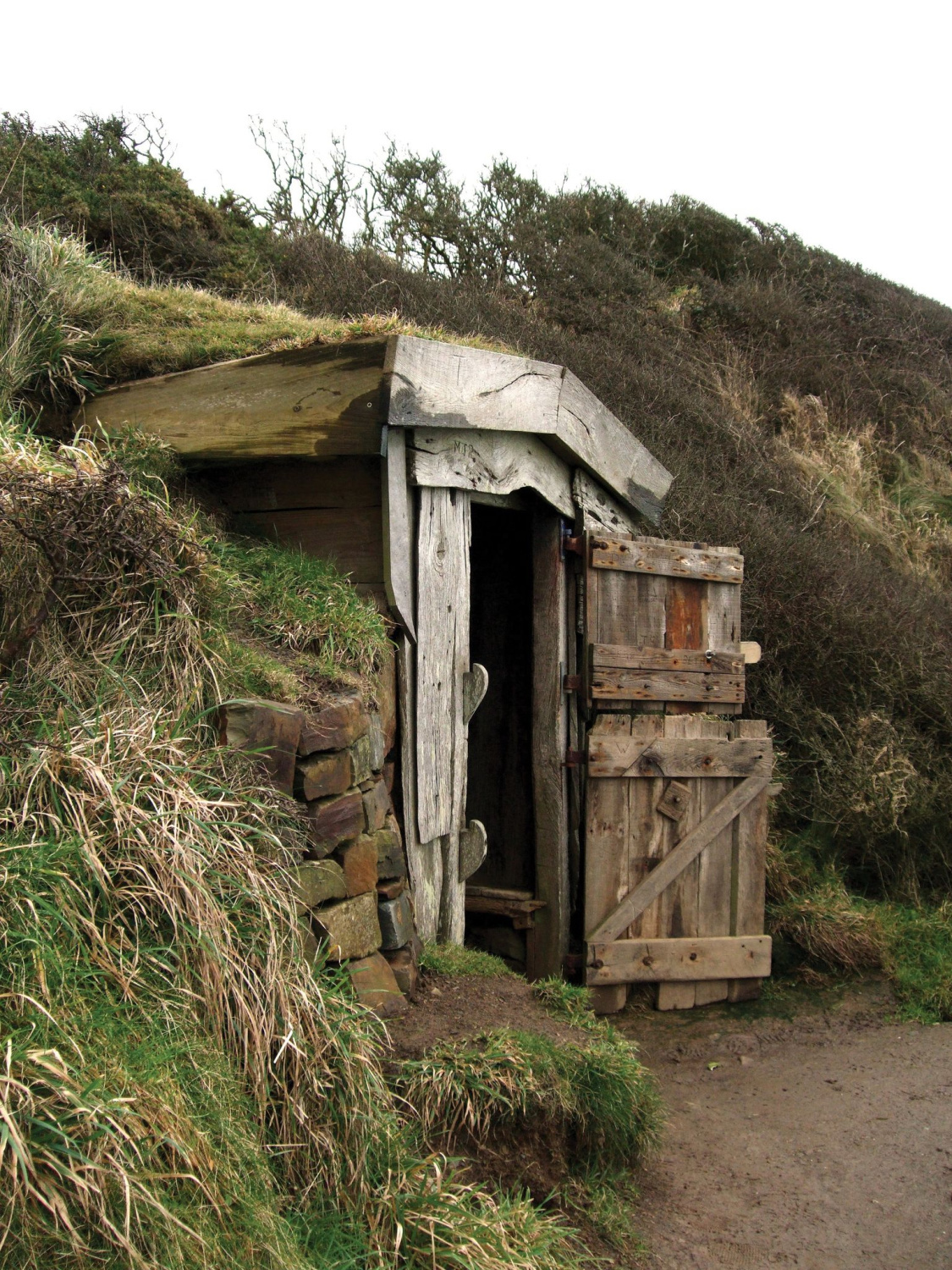 Hawker built himself a small driftwood hut high up on the cliffs near Higher Sharpnose Point, in which he would smoke opium and write his songs and poems. Now known as Hawker's Hut, it is the smallest property in the National Trust portfolio. From this vantage point he would also watch for ships that were in trouble and would raise the alarm. Contemporary accounts say that he could frequently be seen running into the sea and hauling unconscious or dead sailors up the steep cliff paths, rendering what first aid he could or offering them the last rites
But he also saw the hardships suffered by the families of fishermen and miners who could not put to sea or go down the pits during storms and the poor weather of Autumn and Winter. He therefore created what is probably the first British food bank by asking people to donate any excess foodstuffs.
This annual ritual became known as Harvest Festival and it is now known and practiced throughout the world. That is Hawker’s real legacy.
Hawker spent 44 years as an Anglican priest and passed away in 1875 at the age of 72. But, in a characteristically eccentric final act, he converted to Catholicism on his death bed. As he himself wrote: ‘What a life mine would be if it were all written and published in a book!’
It’s unlikely that anyone will ever topple Hawker from the Number One spot of eccentric Cornish vicars. However, one name that often crops up as an ‘also-ran’ is Frederick Densham. However, while there’s no doubt that he did have some very strange habits, the behaviour for which he is best known has given him a reputation that is undeserved. Well, not quite so deserved anyway.
Densham was the one time rector of St Bartholomew’s church in Warleggan. However, he wasn’t a popular man and, within a very short time of arriving in 1931, he managed to alienate his entire congregation.
Firstly, he banned whist drives and music concerts and other church-based social activities and events. Then he began preaching the virtues of vegetarianism to a parish primarily made up of cattle and sheep farmers. He also spoke often of his admiration for Mahatma Gandhi and encouraged people to learn more about him and follow his life principles. But the final straw came when he painted the inside of his ancient church with garish red and blue stripes and colourful murals; Densham had spent some time in India and was a great lover of Hindu culture and their highly decorated temples. The congregation decided that enough was enough and simply stopped coming.
Densham hadn’t set out to upset anyone, it seems. Contemporary accounts describe him as a kindly and generous man, known for bringing flowers to villagers in the Spring and sending milk to people who were ill. He longed for intellectual stimulation and wrote constantly, sending and receiving several letters per week. It therefore appears that his clashes with his congregation stemmed not from his attitude towards them but the other way round. Densham was an Anglican but had been brought up in a Methodist household and he was, therefore, something of a radical and, to use a term common at that time, a believer in ‘Low Church’ style evangelism. However, his congregation was very conservative and traditionally ‘High Church’ – almost Catholic in their habits – and they expected him to conform to strict rituals and ceremony. He did neither, and so his parishioners began to resent him, and vice versa. But Densham was unrepentant and, once the pews had emptied, he locked the church doors, built an eight-foot-high barbed-wire fence around the rectory and rarely ventured out thereafter. When he did visit the church, he would place cards on the seats in the first six pews, each labelled with the name of some vicar or other man of God that he respected. He would then preach to them. We know this to be true because he noted it in the church records.
Densham died in 1953 having lived a tragically lonely life subsisting for many years on little more than nettles and porridge. And he might have well have been forgotten if Daphne du Maurier hadn’t used him as the template for the mad vicar in her novel Jamaica Inn. She also created the myth that, instead of cards, Densham would preach to cardboard cut-outs of his congregation. The story, coming from such a famous source, quickly spread into books, newspapers, magazines and, eventually, websites and the story is now re-told so often that most people take it, if you’ll pardon the pun, as gospel. But it simply isn’t true, much as we’d all like it to be.
And so the Densham story persists. Most recently, he was portrayed by Edward Woodward (in his last ever film role) in 2009’s A Congregation of Ghosts. While Woodward puts in a brilliant final performance, it’s a shame that the director chose to further spread the urban myth version of Densham’s life and suggest that he descended into madness. But then, would the rather more pedestrian truth have made such a compelling story? Probably not.
Both Densham and Hawker are both still spoken of today because of their perceived eccentricity. Everyone loves a slightly potty vicar and we’ve a long British tradition of them appearing in films, TV and novels from All Gas and Gaiters and the Dick Emery Show to The Vicar of Dibley and Wallace and Gromit’s Curse of the Were-Rabbit. I’m therefore pretty sure that it will continue and that we’ll see many more in years to come.
Amen to that.