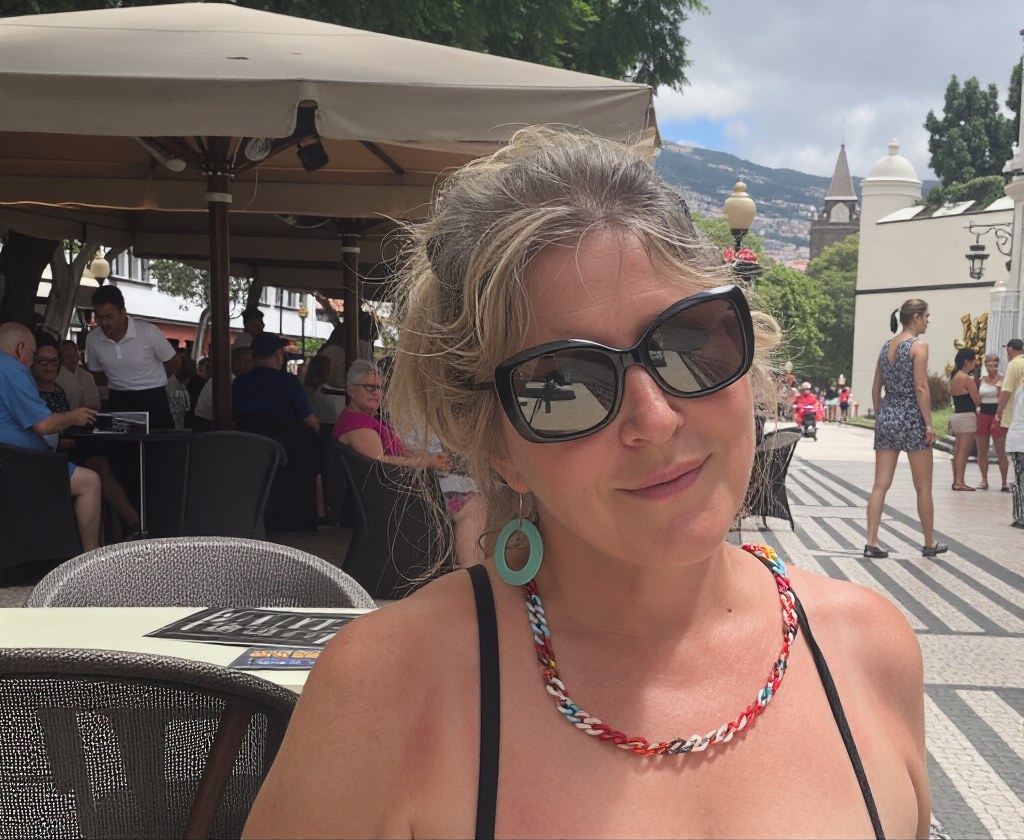
The painter on spontaneity, intuition, and the three months in South East Asia she could not afford.
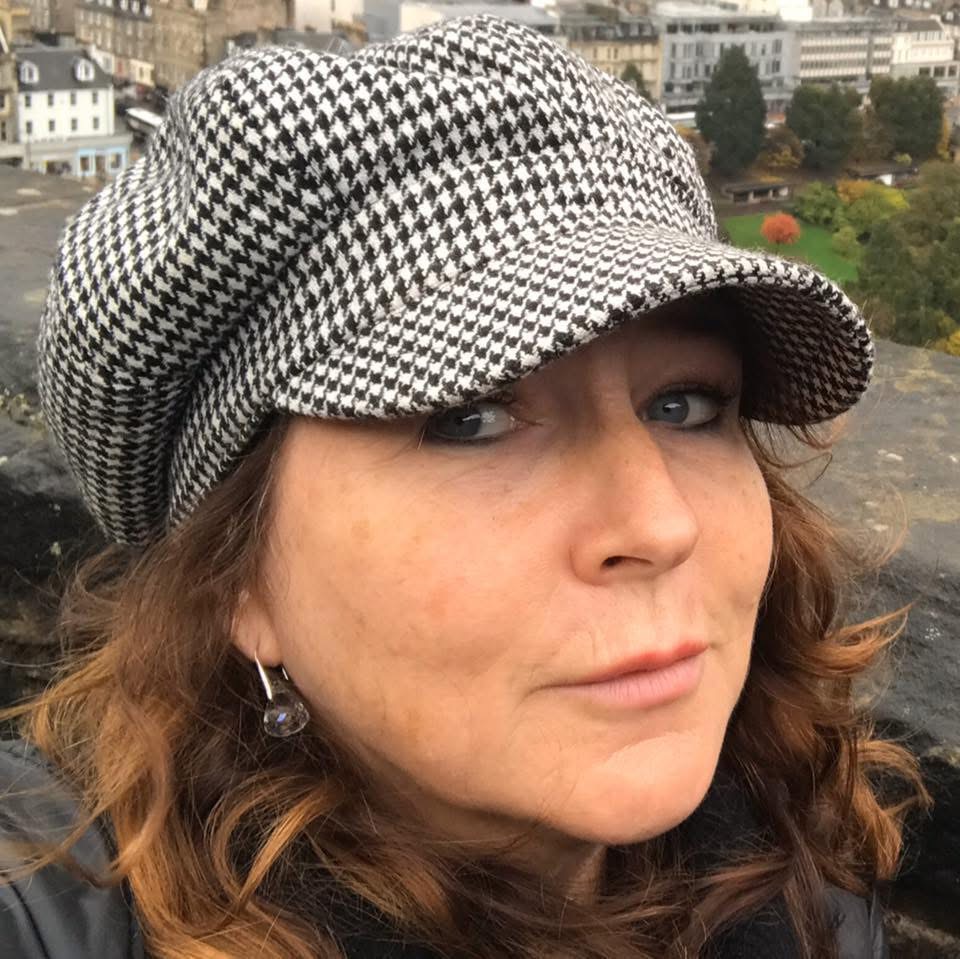
There is a particular sort of defiance that announces itself early. Lucy McAdam Freud was six, newly arrived at a new school, when the headmistress asked whether anybody would care to come to the front of assembly and sing a Christmas carol. Up went the hand - before, she cheerfully admits, any consideration of whether she actually knew the words.
Behind her, an older sister and brother were dispatching frantic semaphore through the ranks of seated children: put it down, put it down. She kept it up. She was chosen. She skipped to the front, stood beside the headmistress, delivered the opening couplet with confidence and then, having exhausted her material, la-la'd her way serenely to the end.
It is as good a self-portrait as any she has painted. Spontaneity and intuition, she says, come before logic - and if that is what people mean when they call her unconventional, she is content to let the charge stand.
She has, at any rate, been called worse. She has also, for a good deal of her life, been called something else entirely: not Freud at all, but Everett, the married name under which she enrolled as a mature student at art school with two small children and a marriage coming apart behind her. Her tutors referred, as tutors do, to the work of Lucian Freud. She said nothing. For a year, she said nothing.
Then came the identity project.
Let's begin where everyone wants us to begin. Have you always been thought eccentric?
I have. I've been told I'm unconventional, and I can only assume it's because I'm happy to put spontaneity and intuition before logic. The carol at six was probably the first evidence. Nobody has produced much evidence to the contrary since.
Looking back - did you find yourself, or did you do it your way?
Both, I think, though not in that order. I was determined to marry young and have a family, because I wanted stability. I realise now I was trying my hand at being conventional. It went against the grain rather.
Afterwards - after the degree, after the marriage ended - I found a path was being laid for me. I'm now doing what I was born to do, and I'm able to support myself doing it. Between the painting, the teaching and the travelling I always yearned to do, the inspiration feeds itself.
Where does the work come from?
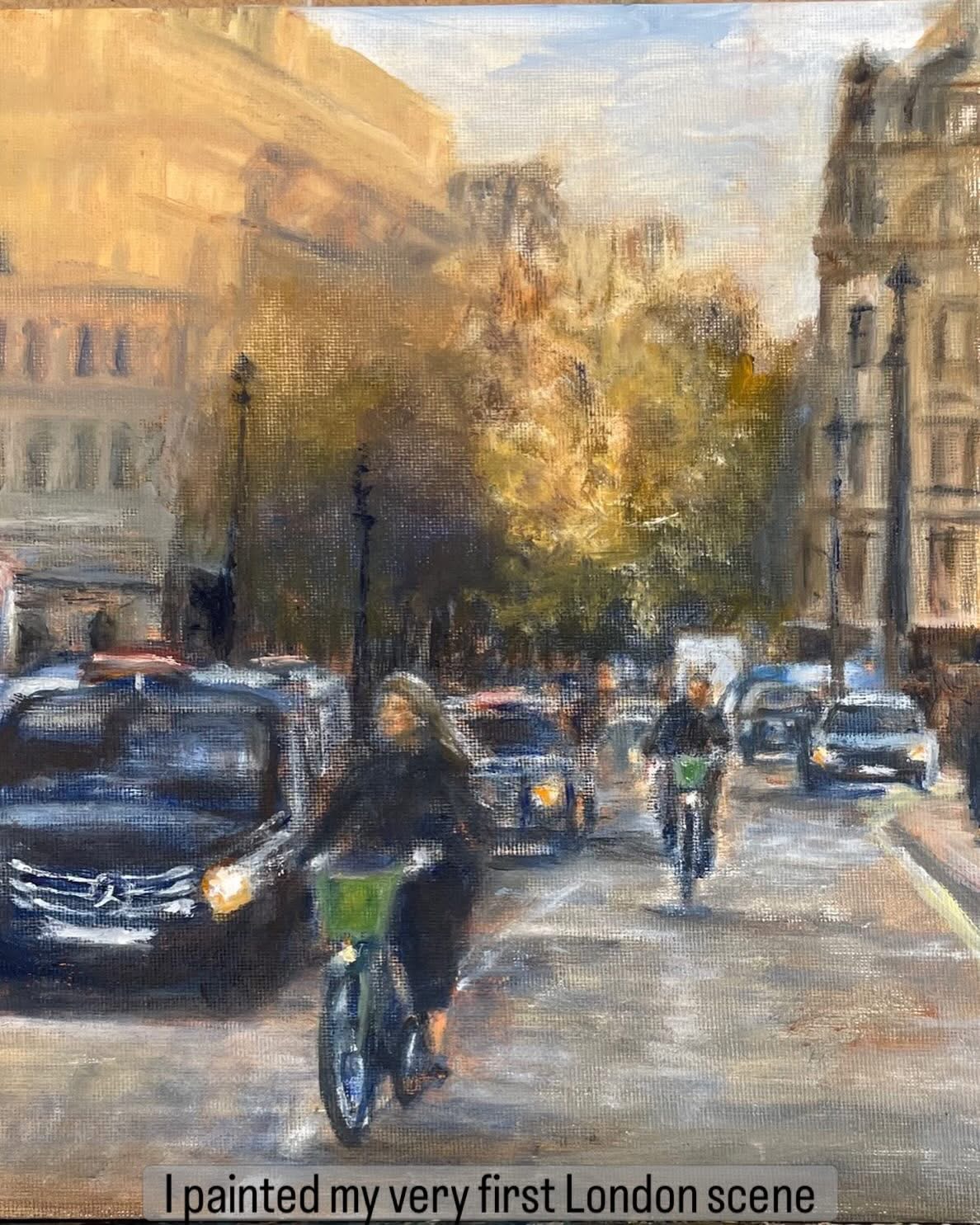
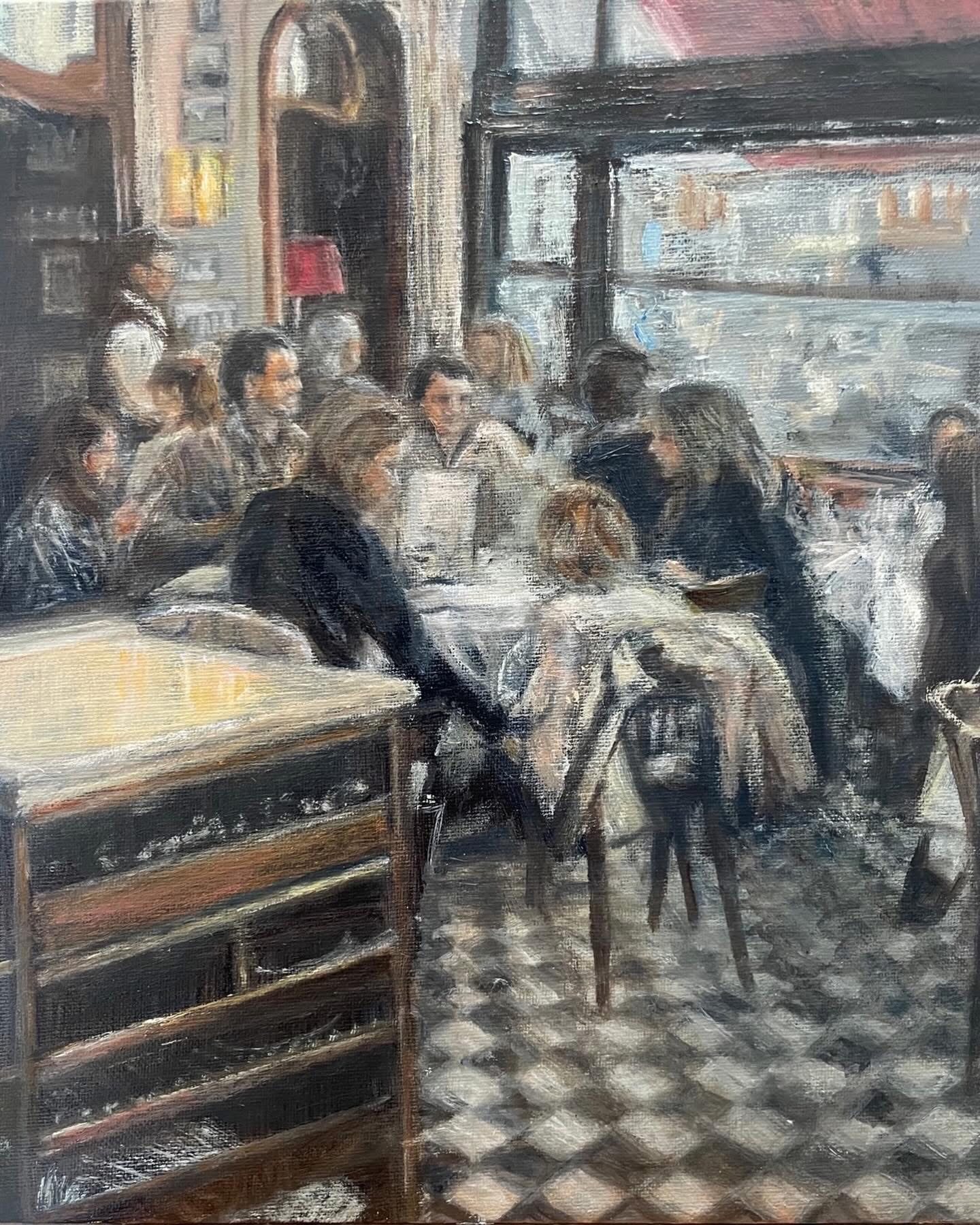
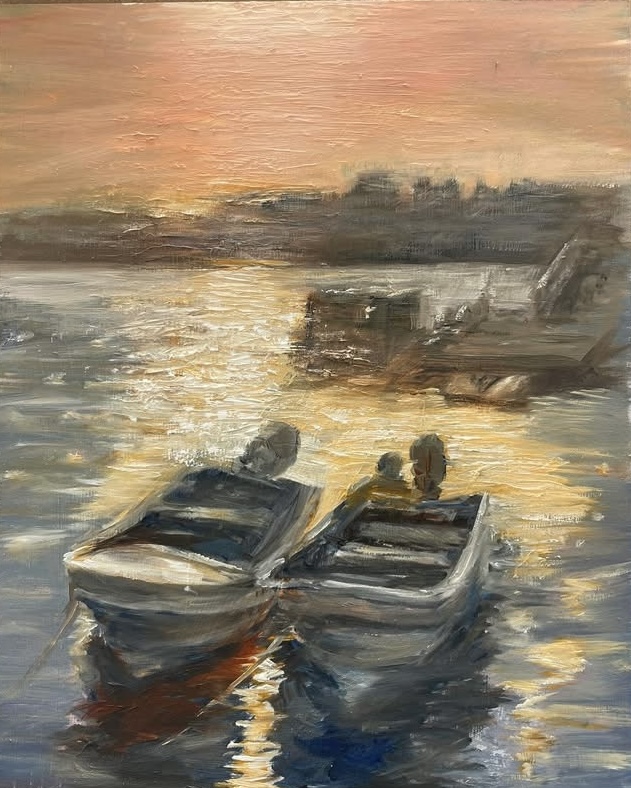
Life, and what it does to me. I try to convey a feeling and a place through colour and movement, in a semi-abstract way. That's how I connect with the world, and I think it's what makes the work mine.
But I take a good many portrait commissions too, which forces me to scrutinise the colours in skin with real intensity - and that can only enhance the rest of the practice. I like looking back at how the technique has shifted over the years.
And yet - this is extraordinary - you can't actually picture any of it in your mind. You have aphantasia.
I only found out recently, at an art masterclass. The instructor asked us all to visualise a particular image, and one of the students said he couldn't - he had aphantasia. I said, at lunch, what's so unusual about that? And he explained that it was, in fact, very unusual. He suggested I take the online test.
That's how I discovered I had it too. No mind's eye at all. I'd spent a lifetime as a painter without ever knowing other people could see pictures in their heads. Different, it turns out, in yet another way.
Does it change how you understand your own work?
It explains a great deal, actually. Perhaps it's why I work from feeling rather than from a remembered image - why the semi-abstract things are about a sensation of a place rather than a photograph of it. I was never copying an internal picture, because there wasn't one. I was chasing the feeling instead.
Semi-abstract landscapes on one side, traditional portraiture on the other. Is that a contradiction?
It's a reflection of my personality. I like having the two running alongside each other. I'd be suspicious of an artist who was only one thing.
The most eccentric thing you've done?
There are candidates. I once gave up my job on the spur of the moment and went travelling around South East Asia for three months, purely to find inspiration for the work. I was in the middle of a divorce and my funds were, let's say, finite. I decided the break was worth the risk.
But the truer answer is the identity project.
Go on.
I was at art school as a mature student, using my married name, and I hadn't mentioned that Lucian Freud - the painter they kept invoking in lectures - was my father. About a year into a two-year foundation course, we were set a project on identity. I decided it was time.
I painted six portraits on six sheets of Perspex and hung them from two rods, one directly behind the other. Sigmund Freud, my great-grandfather, at the very back. Ernst Freud, my grandfather, fifth. My grandmother Lucie, fourth. My father, Lucian, third. My mother, Katherine McAdam, second. And me, at the very front.
The paint got thicker and stronger the further back you went. My own face was only a few brushstrokes.
When my turn came, I turned out the lights in the room and lit the piece from behind with a torch.
The six faces merged into one self-portrait. Mine. I talked in the dark about how the work had come about, and why it was time to be open about who I was.
Then the lights went back on and I asked whether anyone had questions. I looked around at my fellow students. Every mouth was open. Not a word came out of any of them.
And the Club? How did it find you?
By email, of all the unromantic ways - an invitation to a meeting at a private club in Mayfair. It filled me with intrigue and captured my imagination, so I went along to see what on earth it was.
I arrived feeling I wasn't worthy of the invitation. I didn't really understand that a person could be classed as eccentric - I had no bar for it, having been brought up in a thoroughly unconventional family. Then I looked around and thought: these people are free spirits, just like me. I mingled. I have been mingling ever since.
They are extraordinarily supportive of one another, and several have become very good friends. What struck me that first night was hearing people talk about their ideas - people who had achieved genuinely great things simply by thinking outside the box and refusing to be chained by self-imposed rules. The world is a better place for the Eccentric Club, and I don't say that lightly.
It has taken you further than Mayfair, I gather.
In November 2012, a member, Gary Bowman, a lovely man, who sadly died recently, invited me to exhibit in Lviv. He held a press conference in his club in my honour, and I found myself on the Ukrainian national news. They had done their research, too: they informed me that my great-great-grandmother, Sigmund Freud's mother, was born just up the road, in Brody.
Recall one of the most Eccentric moments in your life.
I remember that time I was introduced to Prince Phillip at the Club's Royal dinner party. I was sitting next to Nicky Haslam, who had been going on about how good-looking the prince was, and then decided on a whim to introduce me to him, and I came out with, "You are a very good-looking man!"
What do you make of the present moment?
I dislike that fame, money and power seem to be the goal of so many people now. But I embrace technology, and I relish the fact that we all carry a personal encyclopaedia in our hands.
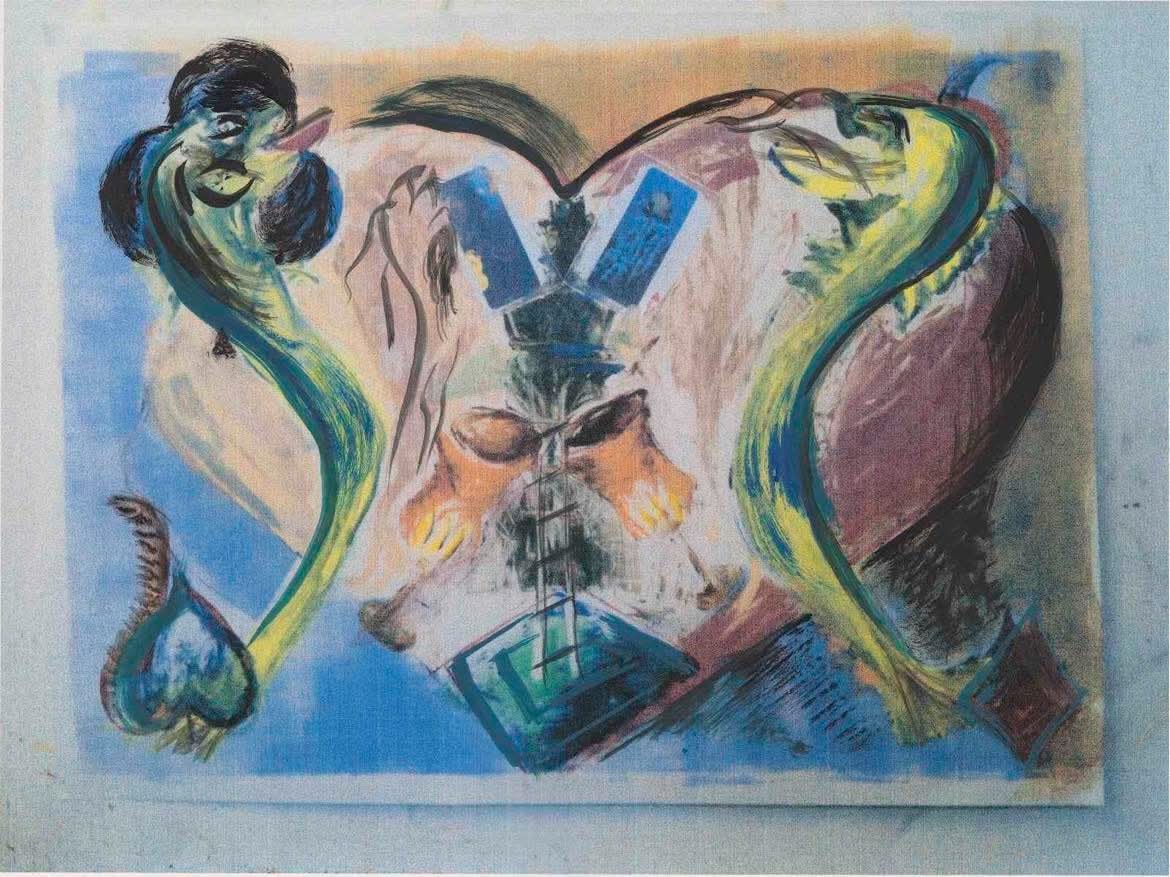
I do worry about the masts going up so close to people's homes, and about the mental health of young people so hooked to their devices that they struggle to speak to their peers at all. My Mind Games work is a response to all this; in The Games People Play series I invented my own symbolic language for it.
And if a time machine were on offer?
I'd use it without hesitation - but I wouldn't stay anywhere. I'd want as many eras as I could get: meeting the great artists of each day, asking them what drove them, moving through the art movements century by century.
Three wishes from a genie.
To be more prolific. For my family and me to stay in good health. And to be surrounded by love. In that order only because you asked me quickly.
What's next?
Among the ideas I'm turning over is a body of work on the theme of Eccentricity itself. I have some hope it might appeal to my fellow Eccentrics - though I'm aware that is a demanding audience, and rightly so.
Lucy McAdam Freud's work can be seen at lucyfreud.com